
Introduction
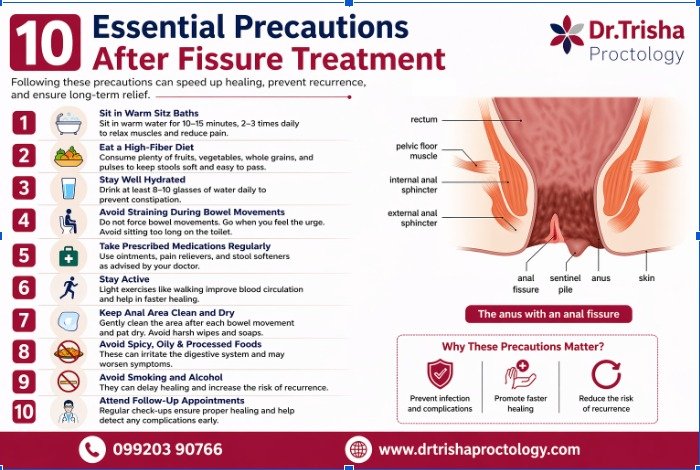
Successfully completing fissure treatment, whether laser surgery or conservative management, is a major step forward. But recovery does not end in the clinic. What you do in the days and weeks after treatment determines how quickly you heal, how comfortable your recovery is, and most importantly, whether the fissure returns. In this guide, 10 Essential Precautions After Fissure Treatment, you’ll learn the key steps to ensure smooth recovery and prevent recurrence.
Dr. Trisha Rai, Noida’s trusted female proctologist, shares the 10 most important precautions every patient must follow after fissure treatment.
Precaution 1: Follow Your Prescribed Medication Religiously
Never skip or stop medications without consulting Dr. Trisha Rai. Post-treatment medications typically include topical creams to relax the sphincter and promote healing, stool softeners to prevent constipation, pain relief medications for the initial days, and antibiotics if prescribed to prevent infection. Take all medications exactly as directed for the full prescribed duration.
Precaution 2: Do Sitz Baths Regularly
Sitz baths are non-negotiable during recovery. Sit in warm water for 15–20 minutes at least 2–3 times daily, especially after every bowel movement. This keeps the area clean, reduces inflammation, relieves pain, and promotes tissue healing. Continue sitz baths for at least 4–6 weeks after treatment.
Precaution 3: Eat a High-Fibre Diet
Constipation is the biggest threat to fissure recovery. A high-fiber diet ensures soft, easy-to-pass stools that do not stress the healing tissue. Include oats, whole wheat, fruits, vegetables, and legumes in every meal. Avoid refined flour, processed food, red meat, and fried food throughout your recovery period.
Precaution 4: Drink Plenty of Water
Aim for at least 8–10 glasses of water daily. Dehydration hardens stools and can undo weeks of healing progress in a single painful bowel movement. If plain water feels difficult, coconut water, buttermilk, and diluted fruit juices are excellent alternatives.
Precaution 5: Never Strain During Bowel Movements
Straining is strictly prohibited during fissure recovery. If you feel the urge but cannot pass stool comfortably, inform Dr. Trisha Rai rather than forcing it. Using a footstool to elevate your feet while sitting on the toilet adopts a more natural squatting position that reduces straining significantly.
Precaution 6: Keep the Area Clean and Dry
Clean the anal area gently with water after every bowel movement. Pat dry with a soft cotton cloth; never rub. Keep the area dry throughout the day as moisture promotes bacterial growth and slows healing. Wear loose, breathable cotton underwear and change it daily.
Precaution 7: Avoid Prolonged Sitting
Sitting for extended periods increases pressure on the anal area and slows blood circulation to the healing tissue. Take short walks every hour if your work requires sitting. If sitting is unavoidable, use a donut-shaped cushion to relieve direct pressure on the anal region.
Precaution 8: Avoid Strenuous Physical Activity
Avoid heavy lifting, intense exercise, cycling, and running for at least 2–4 weeks after fissure treatment. Strenuous activity increases intra-abdominal pressure, disrupts wound healing, and increases the risk of bleeding. Light walking is encouraged from day one, but all other physical activity should be resumed gradually and only after your doctor’s clearance.
Precaution 9: Attend All Follow-Up Appointments
Never skip follow-up visits with Dr. Trisha Rai. These appointments are essential to monitor your healing progress, detect complications early, adjust medications, and confirm complete closure of the fissure. Most patients require at least 2–3 follow-up visits after laser fissure treatment.
Precaution 10: Watch for Warning Signs
Contact Dr. Trisha Rai immediately if you notice any of the following during recovery: increased or worsening pain after the first few days, excessive bleeding from the surgical site, fever above 38°C, signs of infection such as increasing redness, swelling, or pus discharge, complete inability to pass stool for more than 2 days, or reopening of the wound.
Early detection of complications ensures prompt management and protects your recovery.
FAQ:
Q: How long should I follow these precautions after fissure treatment?
A: Most precautions should be followed for a minimum of 4–6 weeks. Dietary and hydration habits should ideally become permanent lifestyle changes to prevent recurrence.
Q: When can I return to work after laser fissure treatment?
A: Most patients can return to desk work within 2–3 days. Physical or manual work should be avoided for at least 2 weeks.
Q: Can I eat spicy food after fissure treatment?
A: Avoid spicy food for at least 4–6 weeks after treatment. Spicy food can irritate the anal lining and significantly worsen post-treatment discomfort.
Q: Is it normal to have some pain after laser fissure surgery?
A: Mild discomfort for the first 3–5 days is normal. Pain that worsens or does not improve after the first week should be reported to Dr. Trisha Rai immediately.
Q: Can fissure come back after laser treatment?
A: Recurrence is possible if precautions are not followed. Maintaining a high-fiber diet, staying hydrated, and avoiding constipation are the most effective ways to prevent a fissure from returning.