
Painless, Minimally Invasive Fissure Treatment by Dr. Trisha Rai. Noida’s Trusted Female Proctologist
Are you experiencing sharp pain, bleeding, or discomfort during bowel movements? You may be suffering from an anal fissure, a small but painful tear in the lining of the anus. The good news? It is completely treatable.
Dr. Trisha Rai, one of the best fissure specialists in Sector 40, Noida, offers advanced laser treatment for fissure that is safe, virtually painless, and requires minimal recovery time. Whether you are looking for fissure treatment without surgery or considering laser fissure surgery, Dr. Trisha Rai provides the right solution tailored to your condition.
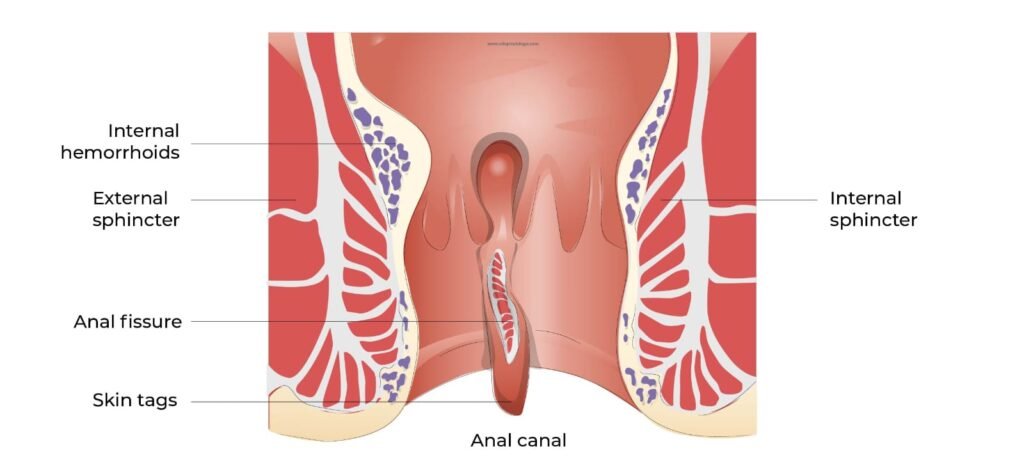
An anal fissure is a small tear or crack in the thin, moist tissue (mucosa) that lines the anus, the opening through which stool passes out of the body. This tear can cause significant pain, burning sensation, and sometimes bleeding, especially during and after bowel movements.
Despite being a common condition, many people suffer in silence due to embarrassment or fear of treatment. The truth is anal fissure is completely treatable, and with modern laser techniques, recovery is faster and virtually painless.
Anal fissures can affect people of all ages and genders, including infants, young adults, and the elderly. However, they are particularly common in people who experience chronic constipation, hard stools, or frequent diarrhoea.
Anal fissures are broadly classified into two types based on their duration and characteristics:
Anal fissure symptoms can range from mildly uncomfortable to severely painful. If you notice any of the following, consult Dr. Trisha Rai, fissure specialist in Sector 40, Noida, without delay:
Dr. Trisha Rai is a highly experienced female proctologist in Sector 40, Noida, specialising in laser-based treatments for piles, fissure, fistula, and pilonidal sinus. She is known for her compassionate approach, confidential consultations, and use of the latest minimally invasive techniques.
Patients across Noida trust Dr. Trisha Rai for:
Many people delay visiting a proctologist out of embarrassment or the hope that the problem will resolve on its own. However, anorectal conditions like fissures rarely heal completely without proper medical attention, and delaying treatment often makes them worse.
What sets Dr. Trisha Rai apart is not just her technical skill; it is her systematic, patient-centered approach to every case. Here is what you can expect when you visit her clinic:
Every treatment begins with a thorough consultation. Dr. Trisha Rai spends quality time understanding:
This comprehensive history helps her form an accurate clinical picture before any examination.
Dr. Trisha Rai performs a careful and gentle physical examination to confirm the diagnosis. She is known for her gentle examination technique, which significantly reduces patient anxiety, especially for first-time visitors who are nervous or apprehensive.
Using clinical findings and, where necessary, additional investigations, Dr. Trisha Rai arrives at a precise diagnosis. She ensures that conditions like fissures are not confused with piles, fistulas, or other anorectal conditions, all of which have different treatments.
Recovery does not end at the clinic. Dr. Trisha Rai provides the following:
With several proctologists available in Noida, here is why patients from Sector 40 and across the city consistently choose Dr. Trisha Rai for their treatment:
Being a female proctologist is one of Dr. Trisha Rai’s most significant advantages. Anorectal conditions are deeply personal and sensitive. Many patients, particularly women, feel far more comfortable discussing their symptoms with a female specialist. Dr. Trisha Rai creates a safe, respectful, and non-judgmental space for every patient who walks through her door.
Dr. Trisha Rai’s clinic is equipped with state-of-the-art laser systems specifically designed for anorectal procedures. Laser treatment offers patients a significantly better experience compared to traditional surgery less pain, faster healing, and same-day discharge.
There are no hidden charges. Dr. Trisha Rai provides a complete cost breakdown before any procedure, so patients can make informed decisions without financial surprises. Cashless insurance options are also available.
Hundreds of patients across Noida have been treated successfully by Dr. Trisha Rai. Her high patient satisfaction rate, strong word-of-mouth referrals, and positive online reviews reflect her commitment to delivering excellent outcomes consistently.
Dr. Trisha Rai uses state-of-the-art laser technology to ensure the safest and most effective outcome for every patient. If you have been suffering from a fissure for weeks or months without relief, laser treatment may be the permanent solution you need.
Everything you need to know before starting your treatment journey.
No. The procedure is performed under local or short general anesthesia. Most patients report minimal to no pain during or after the procedure.
The procedure typically takes 20-30 minutes. Most patients are discharged the same day.
Yes, in many early-stage cases. Dr. Trisha Rai first evaluates whether non-surgical treatment is suitable before recommending laser surgery.
Yes. Dr. Trisha Rai’s clinic is conveniently located and easily accessible from Sector 40 and surrounding areas of Noida.
Absolutely. Many patients, both male and female, prefer a female proctologist for anorectal conditions. Dr. Trisha Rai is experienced, professional, and ensures complete confidentiality.
Modern Anorectal & General Surgery You Can Trust. With expertise in advanced laser-assisted procedures, Dr. Trisha focuses on minimally invasive care.
Copyright 2026. All Rights Reserved. Developed by Wand Weaver.
Copyright 2026. All Rights Reserved.
Developed by Wand Weaver.
WhatsApp us