
Are you experiencing sharp, burning pain every time you visit the washroom? Do you notice bright red bleeding on toilet paper after passing stool? These are classic signs of an anal fissure a small but extremely painful tear in the lining of the anus that affects millions of people across India every year. If you’re searching for the best hospital for fissure treatment in Sector 39, Noida, early diagnosis and the right treatment can provide fast relief and prevent complications.
Advanced Laser Fissure Treatment by Dr. Trisha Rai, Sector 39’s Most Trusted Female Proctologist
The encouraging news is that anal fissure is completely treatable. Dr. Trisha Rai, widely regarded as the best fissure specialist in Sector 39, Noida, offers advanced laser fissure treatment that is safe, virtually painless, and designed for fast, comfortable recovery. Whether you are exploring fissure treatment without surgery or considering laser fissure surgery for a chronic condition, Dr. Trisha Rai provides a personalized, evidence-based treatment plan tailored precisely to your needs.
Expert, confidential fissure care is available right here in Sector 39, Noida. Do not let pain or embarrassment stop you from getting the help you deserve.
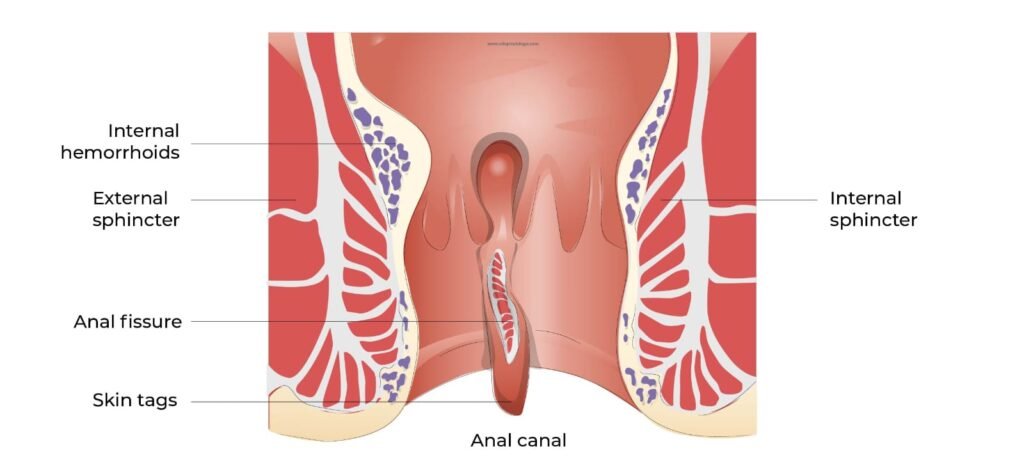
An anal fissure is a small tear or crack in the thin, moist tissue called the mucosa that lines the inside of the anus. This seemingly minor tear can cause pain that is disproportionately intense, often described as a sharp cutting or burning sensation during and after bowel movements.
Anal fissures are among the most common anorectal conditions, affecting people of all ages from infants to the elderly. Despite being so widespread, many patients suffer for months or even years before seeking professional help, hoping the condition will resolve on its own. In most cases, particularly chronic fissures, it does not.
The anal canal has a naturally limited blood supply, especially in the posterior region where most fissures occur. This reduced circulation is one of the reasons fissures struggle to heal without proper medical intervention.
An acute fissure has been present for less than 6 weeks. It appears as a fresh, superficial tear with soft edges. Acute fissures have a reasonable chance of healing with conservative, non-surgical treatment, including dietary changes, topical medications, and sitz baths. However, without proper management, they frequently progress to become chronic.
A chronic fissure has persisted for more than 6 weeks or keeps recurring despite treatment. Over time, the fissure deepens and its edges become hardened and fibrotic. Chronic fissures are often accompanied by a sentinel skin tag at the outer edge and a hypertrophied anal papilla at the inner edge. They do not respond to conservative treatment alone and almost always require laser surgery for complete and permanent healing.
A posterior fissure is located at the back of the anal canal and accounts for approximately 90% of all fissures. The limited blood supply to this area is the primary reason for its high prevalence here.
An anterior fissure is located at the front of the anal canal and is more common in women, particularly those who have undergone vaginal childbirth.
The lateral fissure is located on the side of the anal canal and is less common. Its presence may indicate an underlying condition such as Crohn’s disease, tuberculosis, or sexually transmitted infection, requiring additional investigation.
Do not ignore rectal bleeding. While fissures are a common cause, bleeding can sometimes indicate more serious conditions. A proper examination by Dr. Trisha Rai is the only reliable way to get an accurate diagnosis.
Chronic Constipation is the single most common cause. Hard, dry stools stretch the anal canal beyond its natural capacity during passage, tearing the delicate mucosal lining. Repeated straining compounds the damage with every bowel movement.
Passing Hard or Large Stools even a single episode of passing an unusually large or hard stool can cause an acute fissure in an otherwise healthy individual.
Childbirth and Pregnancy intense straining during vaginal delivery stretches perineal and anal tissue dramatically, frequently causing anterior fissures. Pregnancy-related constipation also increases risk significantly.
Inflammatory Bowel Disease Crohn’s disease and ulcerative colitis cause chronic inflammation of the anorectal region, severely weakening the anal lining and making fissures more likely, deeper, and harder to heal.
Laser fissure surgery is the most advanced treatment available for chronic and recurring anal fissures. Dr. Trisha Rai uses state-of-the-art laser technology to precisely target and treat fissure tissue with minimal impact on surrounding healthy structures.
How laser fissure treatment works: Focused laser energy is directed at the fissure to seal blood vessels and minimize bleeding, stimulate fresh tissue regeneration, relax the internal anal sphincter without cutting it, and eliminate fibrotic hardened tissue in chronic fissures.
For acute fissures and early-stage chronic fissures, Dr. Trisha Rai always evaluates non-surgical options before recommending any procedure. Non-surgical treatment includes high-fibre diet and adequate hydration counselling, topical anesthetic creams for immediate pain relief, muscle-relaxant creams such as diltiazem or glyceryl trinitrate to reduce sphincter spasm, stool softeners to prevent constipation, and Sitz bath guidance for home care.
Non-surgical treatment is effective for a significant proportion of acute fissure patients when followed consistently. However, if the fissure has been present for more than 6 weeks or has not responded to conservative measures, laser surgery is typically the most reliable path to permanent healing.
Every patient receives a thorough clinical evaluation before any treatment decision is made. Dr. Trisha Rai uses clinical examination and proctoscopy where appropriate to accurately confirm the fissure diagnosis, determine whether it is acute or chronic, identify any coexisting conditions such as piles or fistula, and design the most appropriate and personalised treatment plan.
| Feature | Laser Treatment | Traditional Surgery |
| Pain During Procedure | Minimal under anaesthesia | Moderate to significant |
| Risk of Incontinence | Very low | Present sphincter is cut |
| Recovery Time | 1–3 days | 1–3 weeks |
| Hospital Stay | Same-day discharge | 1–2 days admission |
| Bleeding | Minimal | Moderate |
| Recurrence Rate | Low | Low to moderate |
| Scarring | Negligible | Possible |
| Return to Daily Activities | Next day | 1–2 weeks |
| Patient Comfort | High | Moderate |
Many patients delay visiting a specialist hoping symptoms will resolve on their own. This delay almost always makes the condition worse. Consult Dr. Trisha Rai immediately if you experience the following:
Step 1: Detailed Consultation and History Taking A thorough discussion of symptom duration, severity, medical history, diet, hydration habits, lifestyle, and previous treatments. This comprehensive assessment forms the foundation of accurate diagnosis.
Step 2: Gentle Clinical Examination A careful, sensitive examination performed with Dr. Trisha Rai’s signature gentle technique significantly reduces patient anxiety, especially for first-time visitors who are nervous or apprehensive.
Step 3: Accurate Diagnosis Precise confirmation of fissure diagnosis, determination of acute versus chronic status, location, and identification of any coexisting anorectal conditions that may require concurrent treatment.
Step 4: Personalised Treatment Planning A customized treatment plan based on fissure type, duration, severity, patient age, overall health status, and individual preference for surgical or non-surgical management.
Step 5: Conservative Treatment First Non-surgical options are always explored first for suitable cases dietary modification, topical therapy, and sitz bath guidance before any procedure is recommended.
Step 6: Advanced Laser Procedure When Required Where laser treatment is the right choice, Dr. Trisha Rai performs the procedure with precision and care using the latest technology. Every aspect of the procedure is explained to the patient beforehand.
Step 7: Post-Treatment Care and Follow-Up Structured follow-up appointments, detailed post-procedure care instructions, dietary and lifestyle guidance, and direct access for any concerns during recovery.
As a female proctologist, Dr. Trisha Rai creates a uniquely comfortable and safe environment for all patients, particularly women who often delay or avoid treatment due to hesitation or discomfort with male doctors.
Her dedicated proctology focus means patients receive specialist-level expertise at every consultation, not general surgical care. She continuously updates her skills with the latest advances in minimally invasive anorectal procedures.
Her patient-first communication ensures every individual fully understands their diagnosis, all available treatment options, realistic expectations, and every step of their recovery journey before any procedure begins.
Complete confidentiality is maintained at every stage. All consultations, records, and treatment details are handled with the highest level of privacy and discretion.
Transparent, affordable pricing with absolutely no hidden charges. A complete cost breakdown is provided before every procedure. Cashless insurance options are available for eligible patients.
Dr. Trisha Rai is a dedicated, experienced female proctologist in Noida specialising exclusively in anorectal conditions, including fissure, piles, fistula, and pilonidal sinus. She is trusted by patients from Sector 39 and across the Noida region for her compassionate care, advanced laser expertise, and consistently excellent treatment outcomes.
Everything you need to know before starting your treatment journey.
Laser fissure treatment by Dr. Trisha Rai is the most advanced and effective option for fissure in Sector 39, Noida. It is minimally invasive, virtually painless, and allows same-day discharge with fast recovery.
Yes. Dr. Trisha Rai offers non-surgical fissure treatment for acute and early-stage cases. Surgery is only recommended when conservative treatment has failed or is unlikely to be effective.
Dr. Trisha Rai is widely regarded as the best fissure specialist in Sector 39, Noida, with dedicated expertise in laser and minimally invasive anorectal treatments.
The procedure typically takes 20-30 minutes. Most patients are discharged the same day and can return to normal desk work within 24-48 hours.
Yes. Dr. Trisha Rai is a trusted female proctologist conveniently accessible from Sector 39 and all surrounding areas of Noida.
Acute fissures can sometimes heal with consistent conservative treatment. Chronic fissures present for more than 6 weeks almost always require laser surgery for complete and permanent healing.
No. The procedure is performed under local or short general anaesthesia. Most patients report minimal to no pain during or after the procedure. Mild post-procedure discomfort is manageable with prescribed medications.
Modern Anorectal & General Surgery You Can Trust. With expertise in advanced laser-assisted procedures, Dr. Trisha focuses on minimally invasive care.
Copyright 2025. All Rights Reserved. Developed by Wand Weaver.
Copyright 2026. All Rights Reserved.
Developed by Wand Weaver.
WhatsApp us