
Introduction
When you develop an anal fissure, the first instinct for many people is to search for home remedies before visiting a doctor. While there are several remedies that genuinely provide symptomatic relief and support healing for mild fissures, there are also many popular suggestions that do more harm than good. In this guide on Home Remedies for Fissures, we’ll help you understand what actually works and what to avoid for safe and effective healing.
Dr. Trisha Rai, Noida’s trusted female proctologist, separates fact from fiction and tells you exactly which home remedies for fissures really work and which ones to avoid.
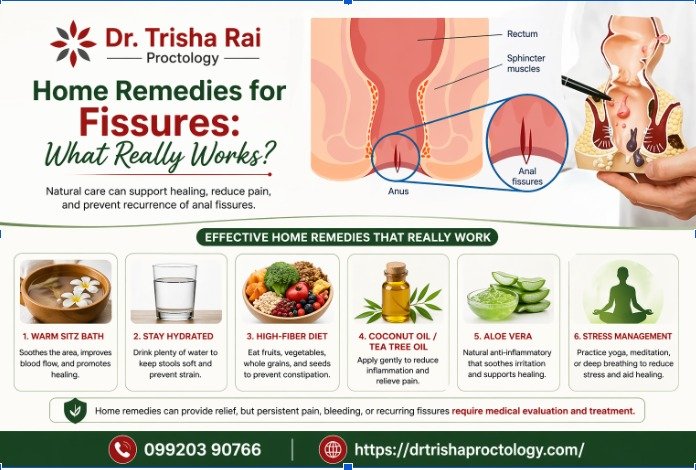
Home Remedies That Actually Work
1. Sitz Baths Highly Effective
Sitting in warm water for 15-20 minutes, 2-3 times daily, is one of the most evidence-supported home remedies for fissure relief. Sitz baths relax the internal anal sphincter muscle, improve blood circulation to the healing tissue, reduce pain and inflammation, and keep the area clean.
Adding a tablespoon of rock salt to the warm water enhances the antiseptic effect. This is safe, inexpensive, and recommended by proctologists worldwide, including Dr. Trisha Rai.
2. High-Fiber Diet: Essential and Effective
A high-fiber diet is not just a remedy; it is the foundation of fissure management. Soft, bulky stools pass through the anal canal with minimal trauma, allowing the fissure to heal without repeated injury. This is scientifically proven and universally recommended.
Effective high-fiber foods include isabgol (psyllium husk), oats, fresh fruits, green vegetables, whole grains, and legumes. Results are typically noticeable within 1–2 weeks of consistent dietary change.
3. Adequate Hydration: Simple but Powerful
Drinking 8–10 glasses of water daily softens stools and supports the body’s natural healing processes. Dehydration is a silent aggravator of fissures that is completely within your control to address. This remedy costs nothing and works reliably.
4. Coconut Oil Application: Soothing and Safe
Organic coconut oil has mild antibacterial and anti-inflammatory properties. Applying a small amount of pure coconut oil to the anal area after cleaning provides a protective barrier, reduces friction, soothes irritation, and supports tissue moisture.
It will not cure the fissure but provides genuine symptomatic relief and is safe for daily use.
5. Aloe Vera Gel’s Proven Soothing Properties
Fresh aloe vera gel has well-documented anti-inflammatory and wound-soothing properties. Applying a small amount of pure, fresh aloe vera gel to the affected area can reduce burning, itching, and irritation around the fissure.
Use only fresh gel from the plant or 100% pure aloe vera without added fragrances or chemicals. Apply after cleaning and drying the area.
6. Warm Olive Oil: Traditional but Effective
Warm olive oil applied to the anal area lubricates the passage, reduces friction during bowel movements, and has mild anti-inflammatory properties. This traditional remedy has been used for generations and provides genuine relief when used consistently.
7. Isabgol (Psyllium Husk) A Game Changer
Isabgol is one of the most effective natural stool softeners available. Taking one teaspoon of isabgol in a glass of warm water before bedtime reliably softens stools and dramatically reduces straining. It is safe for long-term use and particularly effective for fissure patients.
Home Remedies That Do NOT Work (Or Can Make Things Worse)
Applying Garlic Directly to the Fissure
A popular suggestion online, applying raw garlic paste to the anal area, is not only ineffective but potentially harmful. Raw garlic is a strong irritant that can cause chemical burns and worsen fissure pain significantly. Avoid this completely.
Using Turmeric Paste Internally
While turmeric has anti-inflammatory properties, applying turmeric paste directly inside the anal canal can cause staining and irritation and is not clinically proven to heal fissures. Consuming turmeric milk is safer and provides systemic anti-inflammatory benefits.
Ice Application
Applying ice directly to the anal area to numb pain may provide momentary relief but constricts blood vessels and reduces circulation to the area the opposite of what healing tissue needs. Warm compresses are far more beneficial.
Delaying Treatment and Relying Solely on Home Remedies
This is the most dangerous mistake. Chronic fissures, those lasting more than 6 weeks, do not respond to home remedies alone. Continued reliance on home remedies without medical consultation allows the fissure to deepen, become fibrotic, and require more complex surgical intervention.
When to Stop Home Remedies and See a Doctor
Consult Dr. Trisha Rai immediately if:
- Symptoms have not improved after 2–3 weeks of consistent home care
- Pain is severe and affecting daily activities
- Bleeding is increasing rather than decreasing
- You notice pus, discharge, or foul smell around the area
- You have fever along with anal symptoms
- The fissure keeps recurring after apparent healing
FAQ:
Q: Can a fissure heal completely with home remedies alone?
A: Acute fissures (less than 6 weeks old) can sometimes heal with consistent home care, including diet, hydration, and sitz baths. Chronic fissures almost always require medical treatment.
Q: How long do home remedies take to show results for fissures?
A: Dietary changes and sitz baths typically show noticeable symptom improvement within 1–2 weeks for mild fissures.
Q: Is coconut oil safe to apply to a fissure?
A: Yes. Pure organic coconut oil is safe, soothing, and can be applied directly to the external anal area for symptomatic relief.
Q: Can I use both home remedies and prescribed treatment together?
A: Absolutely. Home remedies like sitz baths, high-fiber diets, and hydration complement prescribed medical treatment and can significantly speed up recovery.
Q: What is the single most effective home remedy for a fissure?
A: A combination of sitz baths and a high-fiber diet with adequate hydration is the most effective home-based approach for fissure symptom relief and healing support.
Q: Should I avoid exercise if I have a fissure?
A: Not entirely. Light walking and gentle yoga are beneficial. High-impact exercises should be avoided until healing is confirmed by Dr. Trisha Rai.