
Introduction
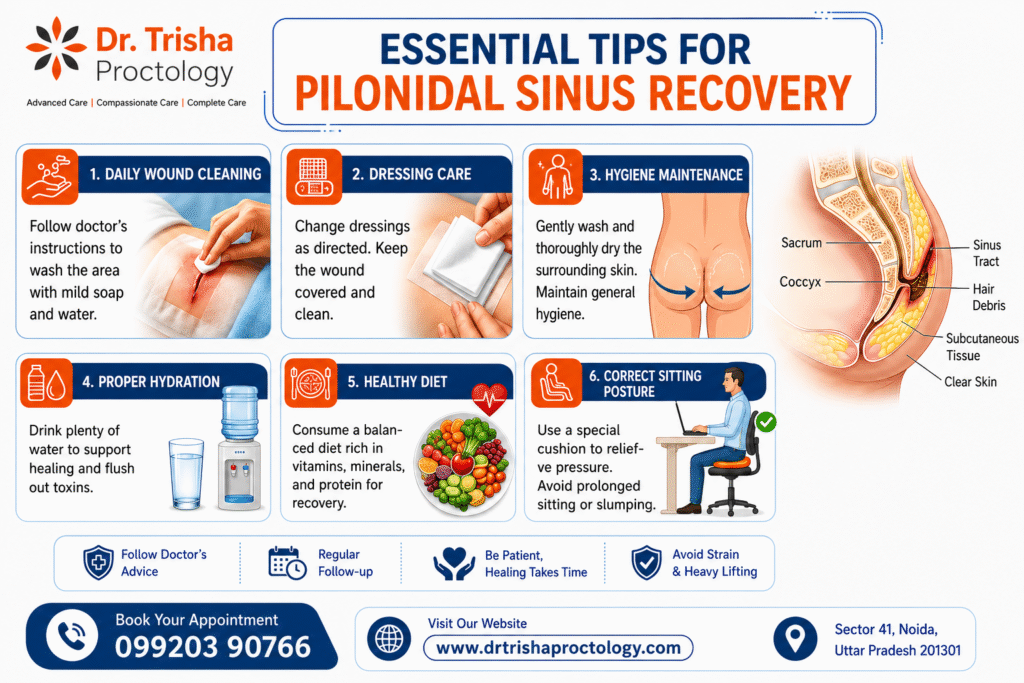
Successfully completing pilonidal sinus treatment, whether laser obliteration, abscess drainage, or reconstructive surgery, is a major step forward. But the recovery period is equally important. How you manage the weeks following your procedure determines how quickly you heal, how comfortable your recovery is, and most importantly, whether the pilonidal sinus returns. Understanding and following essential tips for pilonidal sinus recovery can help reduce complications, promote faster wound healing, and lower the risk of recurrence, ensuring a smoother and more successful recovery journey.
Dr. Trisha Rai, Noida’s trusted female proctologist, shares her essential tips for pilonidal sinus recovery based on years of experience treating patients across Noida and the wider NCR region.
Tip 1: Follow Your Post-Operative Instructions Precisely
This seems obvious but is the most commonly neglected aspect of recovery. Every instruction Dr. Trisha Rai provides regarding medications, wound care, activity restrictions, and diet is based on clinical evidence and years of experience. Deviating from these instructions, even with good intentions, significantly increases the risk of complications and recurrence.
Take all prescribed medications for the full recommended duration, including antibiotics, pain relief, and any wound care preparations. Never stop medications early because symptoms have improved.
Tip 2: Maintain Meticulous Wound Hygiene
The natal cleft region where pilonidal sinus develops is inherently prone to moisture accumulation, bacterial growth, and hair re-entry. Maintaining impeccable wound hygiene throughout the recovery period is non-negotiable.
Clean the wound area daily using the antiseptic wash recommended by Dr. Trisha Rai. After cleaning, ensure the area is completely dried use a clean, soft cloth or a hair dryer on the cool setting to remove all moisture. Change wound dressings exactly as instructed. Never leave the wound area moist or covered in damp dressings.
Tip 3: Avoid Prolonged Sitting
Extended sitting is one of the primary risk factors for pilonidal sinus development, and during recovery, it also significantly impairs healing by creating constant pressure and friction on the wound site.
If your work requires sitting, use a donut-shaped or coccyx cushion to relieve direct pressure on the wound. Take a short walk of 5–10 minutes every hour. Avoid long car journeys, flights, and extended periods on hard surfaces until Dr. Trisha Rai confirms the wound has healed adequately.
Tip 4: Keep the Area Hair-Free Throughout Recovery
Hair re-entry into the healing wound is the most common cause of early pilonidal sinus recurrence. During the recovery period, keep the natal cleft and surrounding area completely free of hair using shaving or depilatory cream every 1–2 weeks.
After complete wound healing, transition to permanent laser hair removal of the natal cleft region. This is Dr. Trisha Rai’s strongest recommendation for preventing recurrence, and it works best when started early after healing is confirmed.
Tip 5: Eat a High-Fibre Diet
Constipation and straining during bowel movements increases pressure on the healing wound and can disrupt recovery. A high-fiber diet ensures soft, easy-to-pass stools throughout the recovery period.
Include oats, whole wheat, fresh fruits, green vegetables, and legumes in every meal. Take isabgol (psyllium husk) in warm water before bedtime if needed to ensure bowel regularity. Avoid refined flour products, processed food, and anything that causes constipation during recovery.
Tip 6: Stay Well Hydrated
Adequate hydration supports wound healing, maintains soft stools, and supports immune function during recovery. Drink at least 8–10 glasses of water daily. Coconut water and buttermilk are also excellent additions. Avoid caffeinated beverages and alcohol throughout the recovery period, as both impair wound healing and contribute to dehydration.
Tip 7: Avoid Strenuous Physical Activity
Heavy lifting, intense exercise, cycling, and prolonged walking should be avoided for at least 3–4 weeks after pilonidal sinus surgery. These activities increase pressure on the wound, risk disrupting healing tissue, and may cause wound breakdown or bleeding.
Light walking is actively encouraged from the first day after treatment. Gradually increase activity levels based on comfort and with Dr. Trisha Rai’s clearance.
Tip 8: Attend Every Follow-Up Appointment
Follow-up appointments are not optional extras; they are essential components of your treatment. Dr. Trisha Rai uses these visits to assess wound healing from the inside out, detect any early signs of infection or recurrence, adjust wound care instructions as healing progresses, and confirm when it is safe to resume normal activities and laser hair removal.
Tip 9: Watch for Warning Signs
Contact Dr. Trisha Rai immediately if you notice increasing pain after the first few days, fever above 38°C, new swelling or redness around the wound, pus discharge with foul odor, wound edges separating or reopening, or any new openings appearing near the original wound site.
Tip 10: Commit to Long-Term Prevention
Recovery from pilonidal sinus treatment is not just about healing the current wound; it is about permanently changing the conditions that allowed the sinus to develop in the first place. Commit to permanent laser hair removal, maintain a healthy body weight, practice good natal cleft hygiene indefinitely, and attend any recommended monitoring appointments after your initial recovery is complete.
FAQ
Q: How long does pilonidal sinus recovery take after laser treatment?
A: Most patients return to desk work within 3–5 days after laser pilonidal sinus treatment. Complete wound healing takes 4–6 weeks. Reconstructive surgery recoveries may take longer.
Q: Can I shower normally during pilonidal sinus recovery?
A: Yes, but ensure the wound area is thoroughly cleaned and completely dried after every shower. Avoid soaking the wound in a bath until Dr. Trisha Rai confirms it is safe to do so.
Q: When can I start laser hair removal after pilonidal sinus treatment?
A: Dr. Trisha Rai typically recommends waiting 6–8 weeks after complete wound healing before beginning laser hair removal sessions on the natal cleft region.
Q: Is it normal to have some discharge from the wound during recovery?
A: A small amount of clear or slightly blood-stained discharge in the first week is normal. Increasing discharge, pus, or foul smell should be reported to Dr. Trisha Rai immediately.
Q: Can I drive during pilonidal sinus recovery?
A: Avoid driving for at least 1–2 weeks after surgery due to sitting discomfort and the risk of disrupting wound healing. Resume driving only when sitting is comfortable and with Dr. Trisha Rai’s approval.