
Introduction
How to Know Whether My Fistula is Simple or Complex? is one of the most common questions patients ask after being diagnosed with a fistula. An anal fistula is a small tunnel that develops between the inside of the rectum and the skin near the anus, usually after an infection or abscess. While all fistulas require medical evaluation, not every fistula is the same. Some are simple and straightforward, while others are complex, involving multiple tracts or deeper tissues. Understanding the difference is essential because it directly affects the treatment plan, recovery time, and the chances of recurrence. Early diagnosis by an experienced proctologist helps determine the type of fistula and ensures the most effective treatment for long-term relief.
If you are experiencing persistent pain, swelling, or discharge, consulting Dr. Trisha Rai at the earliest can help you receive an accurate diagnosis and the right treatment before complications develop.
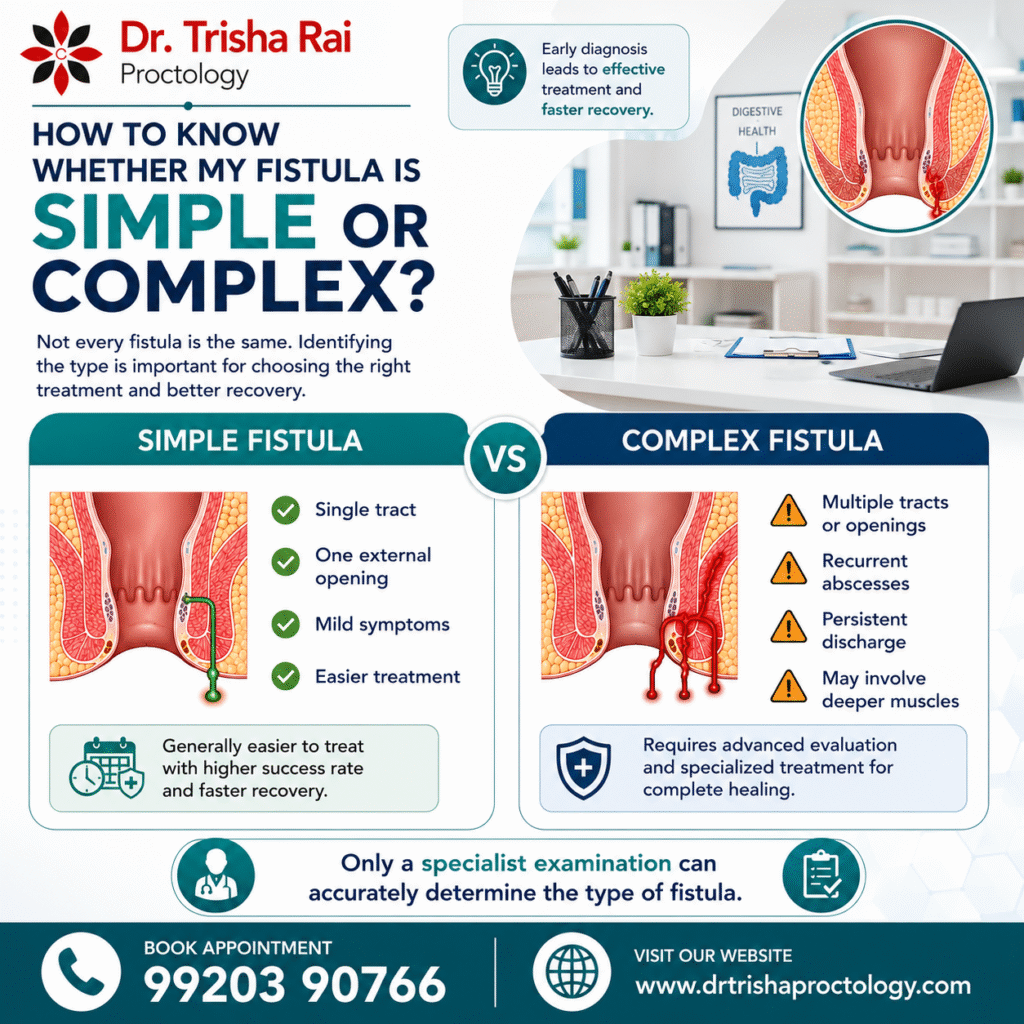
What Is a Simple Fistula?
A simple fistula is usually a single, straight tunnel with one external opening. It involves only a small portion of the surrounding muscles and is generally easier to treat.
Common Signs of a Simple Fistula
- Single external opening near the affected area
- Mild to moderate pain
- Occasional pus or fluid discharge
- Minimal swelling
- Less extensive tissue involvement
- Faster healing after treatment
Simple fistulas often respond well to minimally invasive procedures, especially when diagnosed early.
What Is a Complex Fistula?
A complex fistula is more advanced and may have multiple branches or involve a larger portion of the surrounding muscles. It often requires specialized treatment planning to preserve muscle function while completely treating the fistula.
Common Signs of a Complex Fistula
- Multiple external openings
- Continuous pus or blood-stained discharge
- Severe pain and swelling
- Recurrent abscess formation
- Deep or branching fistula tracts
- Previous failed fistula surgery
- Delayed healing
Complex fistulas should always be treated by an experienced proctologist to reduce the risk of recurrence and complications.
Simple vs. Complex Fistula
| Feature | Simple Fistula | Complex Fistula |
|---|---|---|
| Number of openings | Usually one | Multiple |
| Tract | Straight | Branched or multiple |
| Pain | Mild to moderate | Moderate to severe |
| Discharge | Occasional | Persistent |
| Recurrence | Lower | Higher |
| Treatment complexity | Easier | More advanced |
Why an Accurate Diagnosis Matters
Many people assume that all fistulas are similar, but treating a complex fistula like a simple one can increase the risk of recurrence. A proper examination allows your specialist to identify the following:
- The exact location of the fistula tract
- Whether there are multiple branches
- Muscle involvement
- Presence of infection or abscess
- The most suitable treatment option
Accurate diagnosis leads to better outcomes and reduces the chances of repeat surgery.
How Is a Fistula Diagnosed?
A proctologist may recommend the following:
- Detailed medical history
- Physical examination
- Digital examination
- MRI Fistulogram (for complex cases)
- Endoanal Ultrasound (when required)
These investigations help determine whether the fistula is simple or complex and guide treatment planning.
Treatment Options for Fistula
The treatment depends on the type and severity of the fistula.
Laser Fistula Treatment
Laser treatment is a minimally invasive procedure that offers:
- Less pain
- Minimal bleeding
- Faster recovery
- Reduced hospital stay
- Lower risk of complications
Patients looking for Laser treatment for Fistula in Sector 40 Noida often prefer laser because it allows a quicker return to daily activities.
Kshar Sutra Therapy
This Ayurvedic parasurgical treatment may be suitable for selected fistula cases under expert supervision.
Fistulotomy
A commonly performed procedure for simple fistulas that involves opening the fistula tract to allow proper healing.
Advanced Surgical Management
Complex fistulas may require specialized surgical techniques depending on their anatomy and muscle involvement.
Can a Simple Fistula Become Complex?
Yes. Ignoring symptoms or delaying treatment can allow infection to spread and create additional fistula tracts. Early diagnosis greatly improves treatment success and reduces the risk of complications.
When Should You See a Proctologist?
Seek medical attention if you experience:
- Persistent pain around the affected area
- Swelling or redness
- Repeated abscesses
- Continuous pus discharge
- Bleeding
- Fever with swelling
- Symptoms lasting for several weeks
Early treatment often results in a simpler procedure and faster recovery.
Why Choose Dr. Trisha Rai?
Dr. Trisha Rai provides comprehensive evaluation and personalized treatment for simple and complex fistulas using modern diagnostic methods and advanced treatment techniques. Patients seeking the Best Fistula treatment in Sector 41 Noida receive individualized care focused on complete healing and long-term relief.
Whether you are looking for the Best hospital for Fistula treatment in Sector 39 Noida, Laser treatment for Fistula in Sector 40 Noida, or the Best laser fistula surgery in Sector 44 Noida, early consultation with an experienced proctologist can help prevent complications and improve recovery.
Conclusion
Knowing whether your fistula is simple or complex is the first step toward successful treatment. While simple fistulas are generally easier to manage, complex fistulas require careful evaluation and specialized treatment planning. Ignoring symptoms can increase the risk of recurrence and prolonged discomfort. If you notice persistent pain, swelling, or discharge, consult Dr. Trisha Rai for an accurate diagnosis and a treatment plan tailored to your condition.
Frequently Asked Questions (FAQs)
1. How can I tell if my fistula is simple or complex?
A simple fistula usually has one opening and a straight tract, while a complex fistula may have multiple openings, branching tracts, recurrent abscesses, and persistent discharge. A specialist examination is needed for confirmation.
2. Can a simple fistula become complex?
Yes. Delaying treatment may allow the infection to spread, creating additional tracts and making the condition more difficult to treat.
3. Is laser treatment suitable for all fistulas?
Laser treatment is effective for many patients, but suitability depends on the fistula’s type, location, and complexity. Your proctologist will recommend the best option after evaluation.
4. What tests are used to diagnose a fistula?
Diagnosis may include a physical examination, digital examination, MRI fistulogram, or endoanal ultrasound to assess the fistula tract.
5. Can a fistula heal without treatment?
In most cases, a fistula does not heal on its own. Delaying treatment can lead to recurrent infections and further complications.
6. How long is the recovery after fistula treatment?
Recovery depends on the treatment method and the complexity of the fistula. Minimally invasive treatments like laser therapy generally offer faster recovery than conventional surgery.
7. When should I consult Dr. Trisha Rai?
If you have persistent pain, swelling, repeated abscesses, or continuous discharge, schedule an evaluation as early as possible to prevent complications and receive appropriate treatment.