
Introduction
The difference between a pilonidal cyst and a pilonidal sinus is a common question among people experiencing pain, swelling, or discharge near the tailbone. Pilonidal disease is a common condition that affects the skin near the tailbone, just above the buttocks. Many people use the terms “pilonidal cyst” and “pilonidal sinus” interchangeably, but they are not exactly the same. Understanding the Difference Between a Pilonidal Cyst and a Pilonidal Sinus is important because each condition may require a different treatment approach. Early diagnosis and timely care can prevent infection, reduce discomfort, avoid complications, and help you choose the most appropriate treatment for long-term relief.
If you experience pain, swelling, or discharge near the tailbone, consulting an experienced proctologist like Dr. Trisha Rai can help you receive the correct diagnosis and effective treatment.
What Is a Pilonidal Cyst?
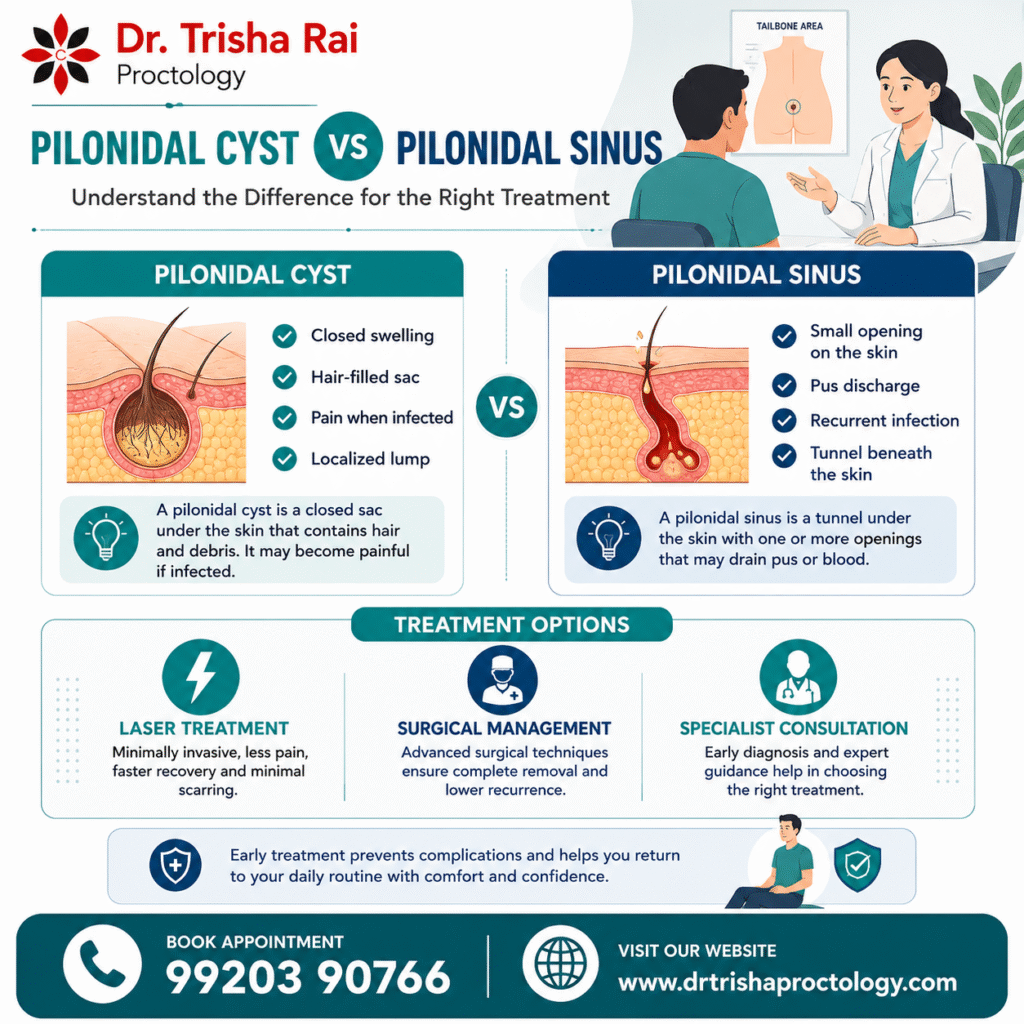
A pilonidal cyst is a closed sac that develops under the skin near the tailbone. It often contains hair, dead skin cells, and other debris. In many cases, a pilonidal cyst may not cause symptoms unless it becomes infected.
Common Features of a Pilonidal Cyst
- Closed pocket beneath the skin
- Contains hair and debris
- May remain painless initially
- Can become swollen and infected
- May develop into an abscess
A pilonidal cyst usually develops because loose hair penetrates the skin, triggering inflammation and infection.
What Is a Pilonidal Sinus?
A pilonidal sinus is a small tunnel or tract that forms beneath the skin. Unlike a cyst, a sinus usually has one or more openings on the skin surface that allow pus, blood, or fluid to drain.
Common Features of a Pilonidal Sinus
- Small opening near the tailbone
- Continuous or intermittent discharge
- Recurrent infections
- Pain while sitting
- Swelling and redness
- Chronic inflammation
A pilonidal sinus is often the result of an infected pilonidal cyst that has created a drainage tract.
Difference Between a Pilonidal Cyst and a Pilonidal Sinus
| Feature | Pilonidal Cyst | Pilonidal Sinus |
|---|---|---|
| Structure | Closed sac | Tunnel beneath the skin |
| Opening | Usually closed | One or more openings |
| Discharge | Usually absent unless infected | Common |
| Infection | May occur | Frequently recurrent |
| Pain | Mild or none initially | Often persistent |
| Chronic Condition | Less common | More common |
Causes of Pilonidal Disease
Several factors increase the risk of developing either a pilonidal cyst or pilonidal sinus.
Common Causes
- Ingrown hair
- Excess body hair
- Prolonged sitting
- Obesity
- Poor hygiene
- Excessive sweating
- Friction in the tailbone area
- Family history
- Repeated trauma to the area
Young adults and people with sedentary jobs are more likely to develop pilonidal disease.
Symptoms of a Pilonidal Cyst
Symptoms may include:
- Small lump near the tailbone
- Tenderness
- Swelling
- Redness
- Pain while sitting
- Fever (if infected)
Some cysts remain symptom-free until infection develops.
Symptoms of a Pilonidal Sinus
A pilonidal sinus generally causes more noticeable symptoms, including
- Persistent drainage of pus or blood
- Bad-smelling discharge
- Pain around the tailbone
- Recurrent swelling
- Skin irritation
- Repeated infections
- Difficulty sitting comfortably
These symptoms usually require medical treatment.
How Is It Diagnosed?
Diagnosis is usually straightforward and includes the following:
- Medical history
- Physical examination
- Assessment of sinus openings
- Evaluation of infection
- Imaging tests in complicated cases
Early diagnosis helps prevent recurrent infections and extensive disease.
Treatment Options
Treatment depends on whether the patient has a simple cyst or a chronic sinus.
Conservative Treatment
For mild cases, your doctor may recommend:
- Antibiotics (if infection is present)
- Proper hygiene
- Hair removal
- Warm compresses
- Regular cleaning of the affected area
However, conservative care may not permanently resolve chronic pilonidal disease.
Laser Treatment for Pilonidal Sinus
Laser treatment has become one of the preferred options because it offers several advantages:
- Minimally invasive procedure
- Less pain
- Minimal bleeding
- Faster healing
- Short hospital stay
- Reduced risk of recurrence
- Quick return to daily activities
Patients searching for Laser treatment for Pilonidal Sinus in Sector 40 Noida often choose laser because of its faster recovery and excellent success rate.
Surgical Treatment
For recurrent or complicated disease, surgery may be recommended.
Surgical options include:
- Drainage of abscess
- Sinus excision
- Flap procedures
- Laser-assisted surgery
The most suitable treatment depends on the severity and extent of the disease.
Can a Pilonidal Cyst Turn into a Pilonidal Sinus?
When a pilonidal cyst becomes infected repeatedly, it may eventually form a drainage tract beneath the skin. This tract develops into a pilonidal sinus. Treating the condition early reduces the risk of chronic disease and repeated infections.
Recovery After Treatment
Proper aftercare helps achieve faster healing and lowers the risk of recurrence.
Recovery tips include:
- Maintain proper hygiene
- Keep the area dry
- Avoid prolonged sitting
- Remove excess hair regularly
- Follow dressing instructions
- Wear loose clothing
- Attend follow-up appointments
- Eat a balanced diet and stay hydrated
Why Choose Dr. Trisha Rai?
Dr. Trisha Rai provides comprehensive diagnosis and advanced treatment for pilonidal disease using modern techniques tailored to each patient’s condition. Whether you have a pilonidal cyst or a chronic pilonidal sinus, personalized treatment can help ensure long-term relief.
Patients looking for the Best Pilonidal Sinus treatment in Sector 41 Noida receive expert evaluation and customized care. If you are searching for the Best hospital for Pilonidal Sinus treatment in Sector 39 Noida, advanced Laser treatment for Pilonidal Sinus in Sector 40 Noida, or the Best laser Pilonidal Sinus surgery in Sector 44 Noida, early consultation with Dr. Trisha Rai can help you achieve faster recovery and reduce the chances of recurrence.
Conclusion
Although a pilonidal cyst and a pilonidal sinus are closely related, they are not identical. A cyst is a closed sac beneath the skin, while a sinus is an abnormal tunnel that usually develops after repeated infection. Recognizing the difference allows for timely diagnosis and appropriate treatment. Delaying medical care may lead to recurrent infections, persistent discomfort, and more extensive surgery. If you notice swelling, pain, or discharge near the tailbone, consult Dr. Trisha Rai for expert evaluation and the most suitable treatment plan.
Frequently Asked Questions (FAQs)
1. What is the main difference between a pilonidal cyst and a pilonidal sinus?
A pilonidal cyst is a closed sac under the skin, whereas a pilonidal sinus is a tunnel with one or more openings that can drain pus or fluid.
2. Can a pilonidal cyst become a pilonidal sinus?
Yes. Repeated infection of a pilonidal cyst can lead to the formation of a sinus tract.
3. Is laser treatment effective for a pilonidal sinus?
Yes. Laser treatment is a minimally invasive option that offers less pain, faster recovery, minimal bleeding, and a lower risk of recurrence for suitable patients.
4. What causes a pilonidal sinus?
Common causes include ingrown hair, friction, prolonged sitting, obesity, excessive sweating, and poor hygiene.
5. Can a pilonidal sinus heal without surgery?
Some mild infections may improve temporarily with conservative care, but chronic or recurrent pilonidal sinus often requires a definitive procedure to prevent recurrence.
6. How long does recovery take after laser treatment?
Recovery varies by individual, but many patients return to routine activities within a few days while complete healing continues over the following weeks.
7. When should I see a doctor?
Consult a specialist if you experience pain, swelling, redness, persistent discharge, or recurrent infections near the tailbone, as early treatment can prevent complications and improve recovery.