
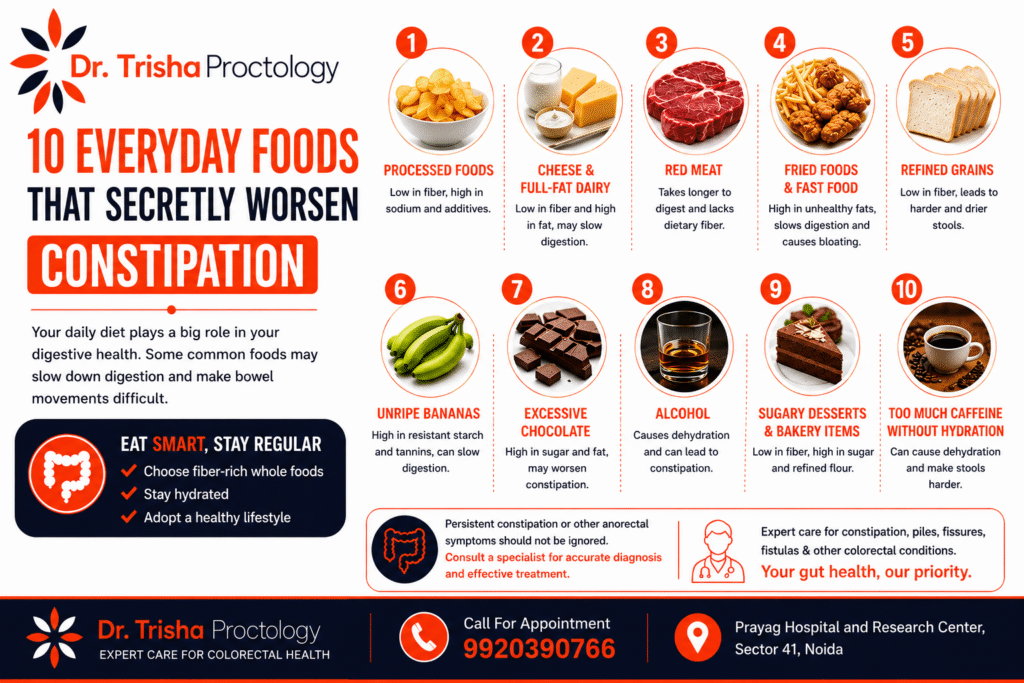
Introduction:
10 Everyday Foods That Secretly Worsen Constipation is a topic everyone should know about, especially if digestive issues have become a regular concern. Constipation is a common digestive problem that affects millions of people worldwide, yet it is often ignored until it begins to interfere with daily life. If you’ve been struggling with infrequent bowel movements, hard stools, bloating, excessive straining, or a constant feeling of incomplete evacuation, your diet may be one of the biggest reasons. While many people know that eating more fiber and drinking enough water can help prevent constipation, few realize that several everyday foods can silently make the condition worse. Identifying these foods and making healthier dietary choices can improve bowel regularity, support digestive health, and reduce the risk of complications such as piles and fissures.
Many of these foods are staples in our everyday meals. Because they are so familiar, we rarely associate them with digestive issues. However, when consumed frequently or in large quantities, especially without balancing them with fiber-rich foods and adequate hydration, they can slow down digestion and make bowel movements more difficult. Let’s explore the 10 everyday foods that may secretly worsen constipation and discover healthier alternatives
1. Processed Foods
Packaged snacks, instant noodles, frozen dinners, chips, biscuits, and ready-to-eat meals may save time, but they are among the biggest culprits behind poor digestive health. Most processed foods are highly refined and contain very little dietary fiber, which is essential for adding bulk to stool and promoting regular bowel movements.
In addition, these foods often contain excessive sodium, unhealthy fats, preservatives, and artificial additives. High sodium intake can contribute to dehydration, making stools harder and more difficult to pass. Since processed foods are also calorie-dense but nutritionally poor, they tend to replace healthier, fiber-rich foods in the diet.
Healthier Alternative: Replace packaged snacks with fresh fruits, roasted nuts, whole-grain crackers, or homemade meals prepared with vegetables, legumes, and whole grains.
2. Cheese and Full-Fat Dairy Products
Cheese, butter, cream, and whole milk are enjoyed by many people, but excessive consumption may contribute to constipation, especially in individuals who are sensitive to dairy products. These foods contain little to no fiber and are often high in fat, which can slow the digestive process.
Some people also have mild lactose intolerance, which can affect gut function differently. While some experience diarrhea, others may develop constipation and bloating after consuming dairy.
This doesn’t necessarily mean dairy should be avoided altogether. Moderation is key, and choosing fermented dairy products like yogurt with probiotics may actually support healthy gut bacteria and improve digestion.
3. Red Meat
Red meat is rich in protein, iron, and essential nutrients, but it is naturally devoid of fiber. Since it takes longer to digest than many plant-based foods, excessive consumption may slow bowel movements, particularly when it replaces vegetables, fruits, and whole grains in your meals.
Additionally, meals centered around large portions of meat often contain fewer fiber-rich side dishes, further increasing the likelihood of constipation.
Pro Tip: Balance your meals with plenty of vegetables, salads, legumes, and whole grains whenever you consume red meat.
4. Fried Foods and Fast Food
French fries, fried chicken, burgers, pizzas, samosas, and other fast foods are delicious but difficult for the digestive system to process. Foods high in saturated fats can slow gastric emptying, meaning food stays in your stomach longer before moving into the intestines.
Combined with their low fiber content, fried foods can lead to sluggish bowel movements and increased bloating. Regular consumption is also associated with obesity, acid reflux, and poor gut health.
Choosing grilled, baked, steamed, or air-fried alternatives can make a noticeable difference in your digestive comfort.
5. White Bread, White Rice, and Other Refined Grains
Refined grains have undergone processing that removes the bran and germ, the parts richest in fiber and nutrients. As a result, foods like white bread, white rice, refined pasta, and bakery products provide quick energy but contribute very little to digestive health.
Without sufficient fiber, stool moves more slowly through the intestines, becoming harder and drier over time.
Making simple swaps such as brown rice instead of white rice, whole wheat bread instead of white bread, and oats instead of refined cereals can significantly improve bowel regularity.
6. Unripe Bananas
Bananas often have a reputation as a food that helps digestion, but their effect depends largely on their ripeness. Green or slightly unripe bananas contain high levels of resistant starch and tannins, both of which slow digestion and may worsen constipation.
As bananas ripen, resistant starch gradually converts into natural sugars, making them easier to digest while increasing their soluble fiber content.
If you’re experiencing constipation, choose fully ripe bananas with yellow skins and brown speckles rather than green ones.
7. Excessive Chocolate
Chocolate is another surprising food that may contribute to constipation in some individuals. Milk chocolate, in particular, contains significant amounts of sugar, saturated fat, and dairy, all of which may slow digestion.
People with irritable bowel syndrome (IBS) or sensitive digestive systems often report worsening constipation after eating large amounts of chocolate.
Enjoy chocolate occasionally, and if possible, opt for dark chocolate with a higher cocoa percentage and lower sugar content.
8. Alcohol
Alcohol is a well-known cause of dehydration, and dehydration is one of the leading reasons people develop constipation. When your body lacks sufficient water, the large intestine absorbs more water from waste material, resulting in dry, hard stools that are difficult to eliminate.
Excessive alcohol intake may also interfere with the natural muscular contractions of the intestines, further slowing digestion.
If you drink alcohol, ensure you consume plenty of water before, during, and afterward to reduce its dehydrating effects.
9. Sugary Desserts and Bakery Products
Cakes, cookies, pastries, doughnuts, muffins, and other baked treats often combine refined flour, sugar, and unhealthy fats, all ingredients that contribute little to digestive health.
Regularly consuming these foods not only increases constipation risk but also contributes to weight gain, insulin resistance, and chronic inflammation.
Satisfy your sweet cravings with naturally sweet fruits, dates, yogurt with berries, or homemade high-fiber snacks whenever possible.
10. Too Much Caffeine Without Proper Hydration
Many people rely on their morning coffee to stimulate bowel movements, and moderate caffeine intake can indeed have this effect. However, consuming excessive amounts of coffee, energy drinks, or caffeinated beverages without drinking enough water can have the opposite outcome.
Because caffeine has mild diuretic properties, excessive intake may increase fluid loss in some individuals, leaving the body dehydrated and making stools harder to pass.
The key is balance. Enjoy your coffee in moderation while ensuring you drink enough water throughout the day.
Constipation Isn’t Always Just About Food
Although dietary habits play a major role, constipation isn’t always caused by food alone. Persistent constipation can sometimes indicate underlying medical conditions such as hemorrhoids, anal fissures, colorectal polyps, rectal prolapse, pelvic floor dysfunction, thyroid disorders, diabetes, or even colorectal cancer in rare cases.
Ignoring ongoing constipation can lead to complications, including piles, fissures, fecal impaction, and significant discomfort. If constipation lasts for several weeks despite improving your diet and lifestyle, it’s important to seek medical evaluation rather than relying solely on over-the-counter laxatives.
Simple Lifestyle Habits That Help Prevent Constipation
Diet is only one part of maintaining healthy digestion. A few consistent lifestyle habits can dramatically improve bowel regularity and reduce the risk of constipation.
Aim to consume 25–35 grams of dietary fiber every day from fruits, vegetables, whole grains, beans, seeds, and legumes. Drink 2–3 liters of water daily, unless advised otherwise by your healthcare provider. Engage in at least 30 minutes of physical activity most days of the week, as regular movement naturally stimulates intestinal contractions.
It’s equally important not to ignore the urge to have a bowel movement. Delaying bathroom visits can cause stools to become harder over time. Establishing a consistent morning routine, managing stress effectively, and getting adequate sleep also contribute to a healthier digestive system.
Expert Care Can Make All the Difference
Dr. Trisha Rai offers comprehensive evaluation and advanced treatment for constipation and other anorectal conditions using evidence-based, patient-centric approaches. Every treatment plan is carefully tailored to identify and treat the underlying cause of constipation, ensuring effective relief while promoting long-term digestive health. With a focus on minimally invasive procedures, personalized care, and faster recovery, patients receive treatment that prioritizes both comfort and lasting results.
Whether constipation is caused by dietary habits, lifestyle factors, or an underlying colorectal condition such as piles (hemorrhoids), anal fissures, fistulas, or rectal disorders, Dr. Trisha Rai provides accurate diagnosis and customized treatment to help patients regain healthy bowel function.
Patients looking for the best constipation treatment in Sector 41 Noida receive individualized care based on their symptoms and medical history. If you are searching for a constipation specialist in Sector 39 Noida, Dr. Trisha Rai offers advanced diagnostic facilities and modern treatment options with a strong emphasis on patient safety, clinical excellence, and long-term relief from constipation and related anorectal conditions.