
Introduction:
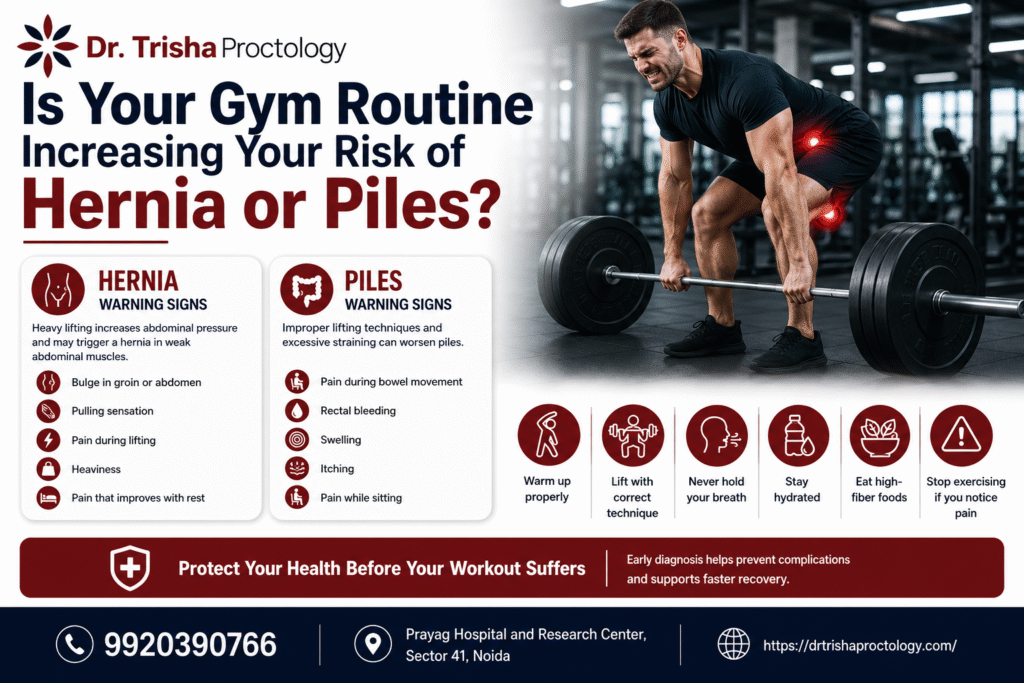
Is Your Gym Routine Increasing Your Risk of Hernia or Piles? It’s a question many fitness enthusiasts don’t consider until symptoms appear. Going to the gym is an excellent way to improve your health, build strength, and stay fit. Whether you enjoy weightlifting, CrossFit, strength training, or functional workouts, regular exercise offers countless physical and mental health benefits. However, while working out is generally good for your body, using incorrect techniques, lifting weights that are too heavy, or ignoring your body’s warning signs can sometimes increase the risk of developing conditions like hernia or piles (hemorrhoids). Understanding whether your gym routine is increasing your risk of hernia or piles and taking preventive measures can help you continue your fitness journey safely without compromising your health.
Can Heavy Gym Workouts Lead to a Hernia?
A hernia develops when an internal organ or fatty tissue pushes through a weak area in the surrounding muscle or connective tissue. Although exercising alone does not directly cause a hernia, heavy lifting can increase pressure inside the abdomen. If your abdominal muscles are already weak due to genetics, previous surgery, aging, or excessive strain, this pressure may trigger a hernia.
Many gym enthusiasts unknowingly increase their risk by lifting weights beyond their capacity, skipping proper warm-ups, or using poor lifting techniques. Holding your breath while lifting heavy weights, a common mistake during squats and deadlifts, further raises pressure inside the abdomen and puts additional stress on the abdominal wall.
The most common types of hernias seen in physically active individuals include inguinal hernias (in the groin), umbilical hernias (near the belly button), and incisional hernias (around previous surgical scars). While these conditions may begin with mild discomfort, they can gradually worsen if left untreated.
Warning Signs You Should Never Ignore
A hernia often develops slowly, and its symptoms may not always be obvious in the beginning. You may notice a small bulge in your groin or abdomen that becomes more visible when standing, coughing, or lifting weights. Some people experience a pulling sensation, heaviness, or dull pain during workouts that improves with rest. As the condition progresses, the discomfort may become more frequent and interfere with daily activities.
Ignoring these early symptoms can lead to complications where the hernia becomes trapped or loses its blood supply, making emergency treatment necessary. Seeking medical advice at the first sign of a hernia can help prevent more serious problems.
Can Intense Exercise Make Piles Worse?
Yes. While exercise is generally beneficial for digestion and overall health, certain types of gym workouts can worsen existing piles (hemorrhoids) or trigger symptoms in individuals who are already at risk. Piles are swollen veins in the lower rectum and anus, often caused by excessive pressure during bowel movements, chronic constipation, prolonged sitting, pregnancy, or heavy lifting.
During exercises such as deadlifts, squats, leg presses, and overhead presses, the pressure inside the abdomen rises significantly. If you strain excessively or hold your breath while lifting, this pressure also affects the veins around the rectum, increasing the likelihood of swelling, pain, and bleeding.
People who already have piles may notice that their symptoms become more severe after intense workouts, especially if they combine heavy lifting with dehydration or poor dietary habits.
Common Symptoms of Piles
Piles can vary from mild to severe depending on their stage. Early symptoms may include itching, irritation, or discomfort around the anus. As the condition progresses, you may experience pain while sitting or during bowel movements, bright red bleeding after passing stools, swelling around the anal opening, or a small lump that may become painful.
These symptoms should never be ignored, particularly if bleeding continues or the pain interferes with your daily routine. Early diagnosis allows for simpler and more effective treatment options.
Why Do Gym Workouts Increase the Risk?
The main reason lies in increased intra-abdominal pressure. Every time you lift heavy weights, especially without proper breathing techniques, your abdominal muscles contract forcefully to stabilize your body. This sudden increase in pressure places stress on the muscles of the abdomen and the veins around the rectum.
If these tissues are already weak, repeated strain over weeks or months can contribute to the development of a hernia or aggravate piles. This does not mean you should avoid exercise altogether. Instead, it highlights the importance of exercising with proper form, gradual progression, and adequate recovery.
How to Protect Yourself While Working Out
Fortunately, you can continue exercising safely by making a few simple adjustments to your routine. Always begin with a proper warm-up to prepare your muscles for activity. Learn correct lifting techniques from a qualified trainer and avoid choosing weights that exceed your current strength level. Focus on controlled movements rather than lifting heavier weights simply to increase numbers.
Breathing correctly during every repetition is equally important. Exhale during the lifting phase and inhale while lowering the weight instead of holding your breath. Maintaining a healthy body weight, staying well hydrated, and consuming a fiber-rich diet can also reduce the risk of constipation, which is a major contributing factor for piles.
If you notice pain, bleeding, swelling, or a bulge while exercising, stop the activity and seek medical evaluation before returning to your workout routine.
When Should You Consult a Specialist?
Many people dismiss the early signs of hernias or piles, hoping they will resolve on their own. Unfortunately, these conditions usually require medical evaluation, and delaying treatment can make them more complicated over time. Persistent pain, a visible swelling in the groin or abdomen, bleeding during bowel movements, severe itching, or recurring discomfort after exercise should always be assessed by a specialist. Early diagnosis often leads to simpler treatment, quicker recovery, and a faster return to your normal activities.
Expert Care with Dr. Trisha Proctology Clinic
At Dr. Trisha Clinic, patients receive comprehensive evaluation and advanced treatment for hernia, piles, fissures, fistula, pilonidal sinus, and other colorectal conditions using modern, patient-focused techniques. Dr. Trisha believes in treating the root cause rather than just relieving symptoms, ensuring every patient receives a personalized treatment plan based on their condition and lifestyle. With expertise in minimally invasive procedures, compassionate care, and a commitment to faster recovery, the clinic helps patients regain their comfort and confidence while minimizing pain and downtime. Whether your symptoms are mild or advanced, timely consultation can prevent complications and significantly improve your quality of life.
Book Your Consultation Today
Your fitness goals should never come at the cost of your health. If you experience pain, swelling, or bleeding or suspect you may have a hernia or piles, don’t ignore the warning signs. Early diagnosis and expert treatment can help you recover faster and safely return to your active lifestyle. If you’re looking for an experienced hernia specialist, piles doctor, or proctologist, contact Dr. Trisha’s Proctology Clinic today. Schedule your consultation and receive expert guidance, accurate diagnoses, and advanced treatment tailored to your needs, because protecting your health is just as important as building your strength.