Hernia Treatment

A Hernia occurs when a part of an internal organ or tissue pushes through a weak spot in the surrounding muscle or connective wall. It usually appears as a soft swelling or bulge that may become more noticeable on coughing, bending, or lifting weight.
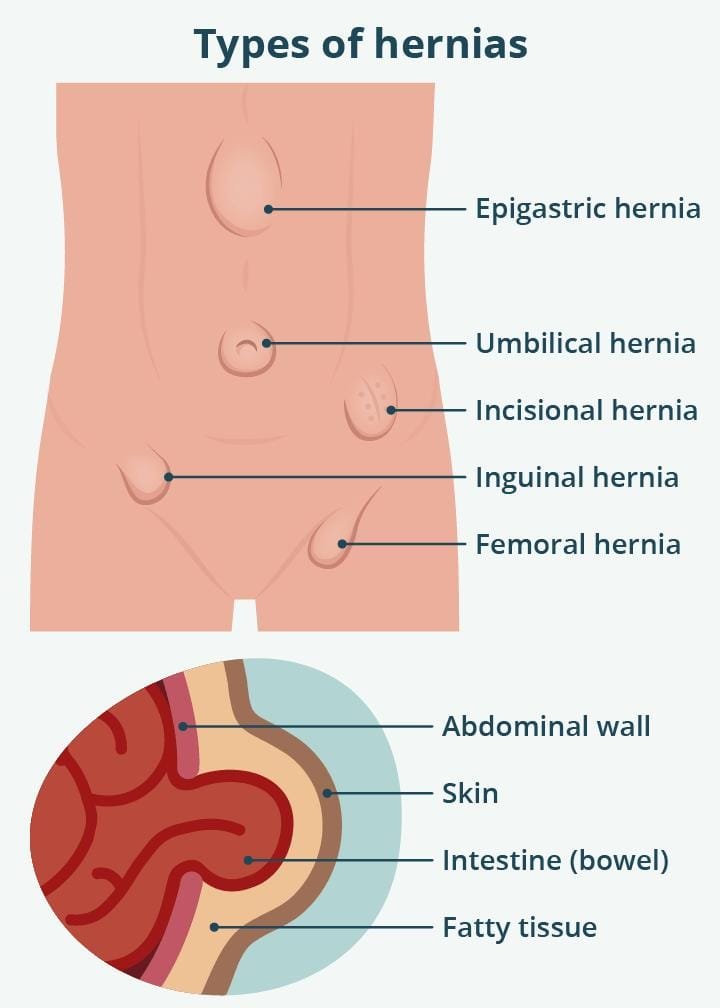
Common Types of Hernia

  • Inguinal Hernia: Bulge in the groin, more common in men.
  • Femoral Hernia: Bulge near the upper thigh, usually seen in women.
  • Umbilical Hernia: Around the belly button; can appear in adults or children.
  • Incisional Hernia: Develops at the site of a previous surgical scar.
  • Hiatal Hernia: The upper part of the stomach moves into the chest cavity through the diaphragm opening.

Causes and Risk Factors

  • Weak abdominal wall (since birth or acquired)
  • Heavy lifting or long-standing cough
  • Chronic constipation or straining during urination
  • Obesity or pregnancy increasing abdominal pressure
  • Previous abdominal surgery or injury

Symptoms

  • Visible or palpable bulge that increases on straining
  • Mild to moderate pain or heaviness in the affected area
  • Discomfort during coughing, walking, or standing for long periods
  • In some cases, nausea, vomiting, or inability to push back the swelling (may indicate a trapped or strangulated hernia, which is an emergency)

Talk to Dr. Trisha Today!

Take the first step toward expert diagnosis and personalised treatment. Dr. Rai’s expertise ensures accurate assessment and the right solution for your condition.

Diagnosis

Physical examination by a surgeon is usually sufficient.
In doubtful cases, ultrasound or CT scan may be advised to know the size, type, and contents of the hernia sac.

Treatment Options

  • A hernia does not heal on its own.
  • Surgical repair is the definitive treatment. The goal is to return the displaced tissue to its normal position and strengthen the weak area using stitches or a surgical mesh.
  • Procedures can be done as open surgery or laparoscopic (keyhole) surgery, depending on the type and size.
  • For unfit patients, a supportive hernia belt may provide temporary relief, but it is not a cure.
 

Post-Surgery Recovery Tips

  • Avoid heavy lifting for 4–6 weeks.
  • Maintain a healthy weight and regular bowel habits.
  • Manage cough and constipation promptly.
  • Resume normal diet as advised by your surgeon.

Dr. Trisha Rai’s Approach

At our centre, we provide individualised evaluation and modern hernia repair techniques to ensure minimal pain, quick recovery, and reduced recurrence risk.
We focus on complete post-operative guidance so you can return to your routine confidently.

Talk to Dr. Trisha Today!

Take the first step toward expert diagnosis and personalised treatment. Dr. Rai’s expertise ensures accurate assessment and the right solution for your condition.

Frequently Asked Questions

Everything you need to know before starting your treatment journey.