
Introduction
Hemorrhoids are swollen veins around the anus or lower rectum, and they can become more common during pregnancy. As the uterus grows, it can place additional pressure on the veins in the pelvic area. Hormonal changes, constipation, and increased pressure during bowel movements can also contribute to hemorrhoid symptoms.
For many pregnant women, hemorrhoids can cause itching, swelling, discomfort, or bright-red bleeding during bowel movements. This often raises an important question: what is the best way to treat hemorrhoids during pregnancy?
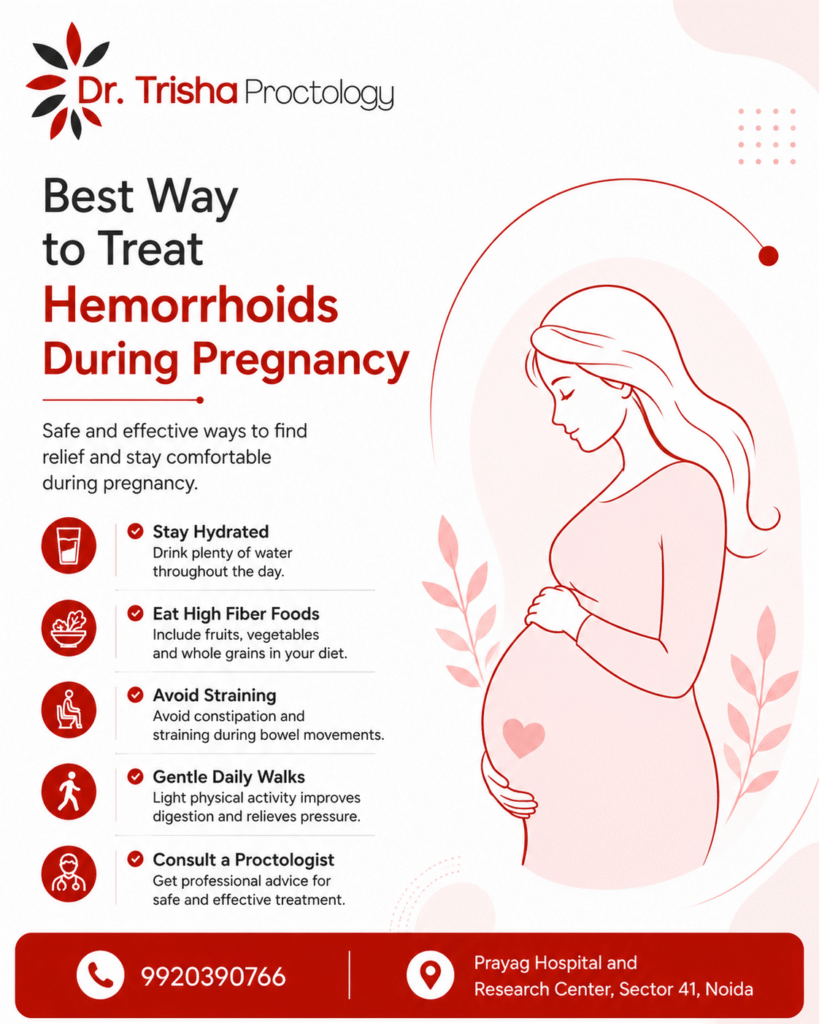
Treatment during pregnancy generally focuses on relieving symptoms, preventing constipation, and avoiding excessive pressure on the affected area. Simple measures such as eating enough fibre, drinking adequate fluids, staying active when medically appropriate, and avoiding straining may help.
Dr. Trisha Rai, a General Surgeon and Proctologist, provides evaluation and treatment for piles and other proctological conditions. A proper consultation can help determine whether symptoms are related to hemorrhoids and what treatment approach may be appropriate during or after pregnancy.
What Are Hemorrhoids During Pregnancy
Hemorrhoids, commonly called piles, are swollen blood vessels in or around the anus. They can be internal, developing inside the rectum, or external, forming under the skin around the anal opening.
Pregnancy can increase the likelihood of hemorrhoids because of changes in blood circulation, pressure from the growing uterus, and constipation.
Common symptoms may include:
- Itching around the anus
- Anal discomfort or soreness
- Swelling around the anal opening
- Bright-red bleeding during bowel movements
- A lump or swelling near the anus
- Pain, particularly with external hemorrhoids
Not every episode of rectal bleeding during pregnancy is caused by hemorrhoids. Persistent or unexplained bleeding should therefore be discussed with a healthcare professional.
Why Are Hemorrhoids Common During Pregnancy
Several changes associated with pregnancy can contribute to hemorrhoids.
Pressure From the Growing Uterus
As pregnancy progresses, the growing uterus can place pressure on veins in the pelvic area. This may affect blood flow from the lower body and contribute to swelling of the veins around the rectum and anus.
Pregnancy-Related Constipation
Hormonal changes during pregnancy can affect bowel movements and may contribute to constipation. Some women may also experience constipation while taking iron supplements.
Hard stools and repeated straining can increase pressure around the anal veins and aggravate hemorrhoid symptoms.
Increased Pressure During Childbirth
The increased pressure placed on the pelvic and anal region during labour and delivery can also contribute to hemorrhoid symptoms.
Best Ways to Manage Hemorrhoids During Pregnancy
The appropriate approach depends on the severity of symptoms and the stage of pregnancy. Conservative measures are often considered first.
Keep Your Stools Soft
Preventing constipation is an important part of managing hemorrhoid symptoms.
A fibre-rich diet can help support softer and more regular bowel movements. Fruits, vegetables, whole grains, oats, beans, and legumes can contribute to daily fibre intake.
If you are increasing fibre, do so gradually to reduce the possibility of bloating or digestive discomfort.
Drink Enough Fluids
Adequate fluid intake can support normal digestion and help prevent stools from becoming excessively hard.
Fluid requirements can vary during pregnancy. Follow the recommendations provided by your obstetrician or healthcare provider, particularly if you have been advised to restrict fluids.
Avoid Straining During Bowel Movements
Excessive straining can increase pressure around the anal veins and may make hemorrhoid symptoms worse.
Try not to force a bowel movement or spend an unnecessarily long time sitting on the toilet. Responding to the natural urge to pass stool may also help prevent constipation.
Stay Physically Active When Appropriate
Pregnancy-appropriate physical activity can support bowel function and general circulation.
Walking and other suitable activities may be helpful for some women. However, exercise recommendations should always take your pregnancy and individual health circumstances into account.
Try Warm Sitz Baths
Sitting in comfortably warm water for around 10 to 15 minutes may provide temporary relief from itching, soreness, and irritation.
The water should be comfortably warm rather than excessively hot.
Can Hemorrhoid Medicines Be Used During Pregnancy
Some topical hemorrhoid treatments may be suitable during pregnancy, but not every cream, suppository, or medication is appropriate.
Before using any hemorrhoid medicine, pain reliever, or herbal remedy, discuss it with your obstetrician or another qualified healthcare professional.
Dr. Trisha Rai can evaluate persistent piles symptoms and help determine whether medical treatment is necessary. When pregnancy is involved, the safety of both the mother and baby needs to be considered when selecting any treatment.
What Should You Avoid When You Have Hemorrhoids During Pregnancy
Certain habits can aggravate hemorrhoid symptoms.
Try to avoid:
- Excessive straining
- Ignoring the urge to pass stool
- Spending too long on the toilet
- Becoming dehydrated
- Consistently eating too little fibre
- Taking hemorrhoid medication without checking whether it is suitable during pregnancy
If constipation becomes persistent, speak with your healthcare provider about appropriate pregnancy-safe options.
When Should You See a Doctor for Pregnancy Hemorrhoids
Mild hemorrhoid symptoms may improve with conservative measures, but medical evaluation is important when symptoms are severe, persistent, or unusual.
You should consider consulting a doctor if you experience:
- Significant or persistent rectal bleeding
- Severe anal pain
- A painful or rapidly enlarging lump
- Symptoms that are not improving
- Repeated hemorrhoid flare-ups
- Uncertainty about the cause of bleeding
Dr. Trisha Rai provides assessment and treatment for piles and other anorectal conditions. An examination can help determine whether your symptoms are due to hemorrhoids or another condition requiring attention.
Can Hemorrhoids Be Treated During Pregnancy
Yes, hemorrhoid symptoms can often be managed during pregnancy. The treatment approach depends on the severity of symptoms, the stage of pregnancy, and the individual’s overall condition.
In many cases, treatment initially focuses on improving bowel habits, preventing constipation, reducing straining, and providing symptom relief.
If symptoms are severe or continue despite these measures, Dr. Trisha Rai can evaluate the condition and discuss appropriate treatment options. Procedures for hemorrhoids are considered according to individual circumstances, and pregnancy can influence the timing and type of treatment recommended.
What Happens to Hemorrhoids After Pregnancy
For many women, hemorrhoid symptoms improve after childbirth as the pressure associated with pregnancy decreases and bowel habits become more regular.
However, hemorrhoids do not always disappear completely. If pain, bleeding, swelling, or prolapse continues after delivery, a consultation with Dr. Trisha Rai can help determine whether further treatment is required.
Conclusion
The best way to treat hemorrhoids during pregnancy usually begins with measures that reduce constipation and pressure on the anal veins. Eating enough fibre, drinking adequate fluids, avoiding excessive straining, maintaining appropriate physical activity, and using simple comfort measures may help manage symptoms.
Medication and other hemorrhoid treatments should be discussed with your healthcare provider before use during pregnancy. Persistent bleeding, severe pain, or symptoms that do not improve should also be medically evaluated.
Dr. Trisha Rai, a General Surgeon and Proctologist, can assess persistent piles symptoms and help you understand the treatment options that may be suitable for your individual condition.