
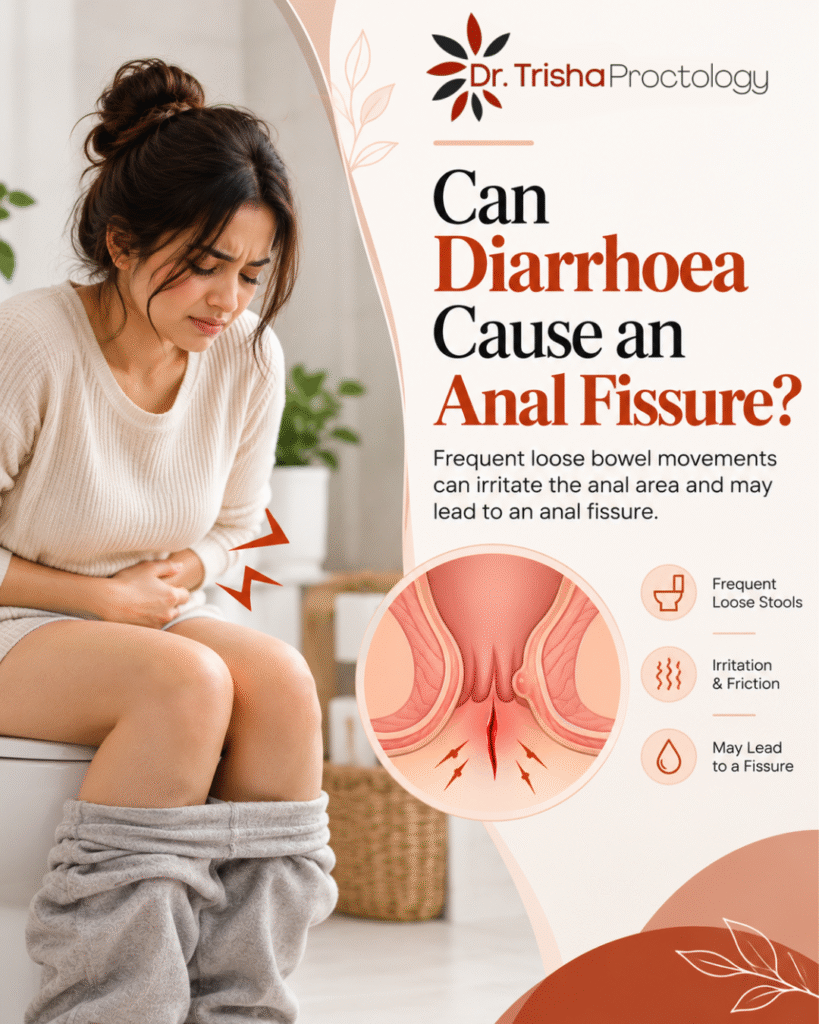
When people think about the causes of an anal fissure, constipation and hard stools are often the first things that come to mind. However, frequent diarrhoea can also irritate and damage the delicate skin around the anus and may contribute to the development or worsening of an anal fissure.
Repeated loose bowel movements can expose the anal area to frequent friction, irritation, and moisture. If the tissue becomes inflamed or damaged, a small tear may develop.
Understanding how diarrhoea can contribute to an anal fissure and knowing how to protect the area can help reduce the risk of recurring symptoms.
What Is an Anal Fissure?
An anal fissure is a small tear in the lining of the anus. It can develop when the tissue is stretched, irritated, or injured.
Hard stools and constipation are common triggers, but repeated diarrhoea can also place stress on the anal area.
Common symptoms include:
- Sharp or burning pain during bowel movements
- Pain that continues after passing stool
- Bright red bleeding
- Itching or irritation around the anus
- Anal discomfort or soreness
- Tightness or spasm of the anal muscles
An anal fissure can be temporary, but repeated irritation may prevent it from healing properly.
Can Diarrhoea Cause an Anal Fissure?
Yes, frequent or prolonged diarrhoea can contribute to an anal fissure.
Unlike constipation, diarrhoea does not usually injure the anus by passing hard stools. Instead, repeated loose bowel movements can irritate the delicate anal lining and surrounding skin.
Frequent wiping and repeated cleaning can add further friction to an already irritated area.
When this happens repeatedly, the tissue may become inflamed, sensitive, and more vulnerable to developing a small tear.
How Does Diarrhoea Lead to an Anal Fissure?
There are several ways frequent diarrhoea can affect the anal area.
1. Repeated Bowel Movements Cause Irritation
Frequent trips to the toilet expose the anal area to repeated friction and movement.
If diarrhoea continues for several days, the surrounding tissue may become sore and inflamed.
This irritation can make the skin more vulnerable to injury.
2. Frequent Wiping Can Damage Sensitive Skin
Repeated wiping with toilet paper can cause friction around the anus.
When the skin is already irritated by diarrhoea, excessive wiping may make the discomfort worse and contribute to small injuries.
3. Digestive Contents Can Irritate the Skin
Loose stools can contain digestive substances that may irritate the sensitive skin around the anal opening.
Repeated exposure can cause burning, redness, and soreness.
4. Frequent Bowel Movements May Interfere With Healing
If an anal fissure has already developed, repeated bowel movements can continually irritate the affected area.
This may slow healing and cause symptoms to persist.
Can Diarrhoea Make an Existing Anal Fissure Worse?
Yes.
If a fissure is already present, frequent loose stools can repeatedly irritate the injured tissue.
This may result in:
- Increased burning
- More soreness
- Greater discomfort after bowel movements
- Continued irritation
- Delayed healing
For someone recovering from an anal fissure, managing persistent diarrhoea can therefore be an important part of supporting recovery.
What Other Factors Can Cause an Anal Fissure?
Diarrhoea is only one possible contributing factor.
Other factors include:
Constipation and Hard Stools
Passing hard or bulky stools can stretch and tear the anal lining.
Straining
Repeatedly pushing or straining during bowel movements can increase pressure on the anal tissue.
Frequent Loose Stools
Repeated diarrhoea can cause irritation and inflammation around the anus.
Childbirth
Anal fissures can sometimes occur after childbirth due to changes and pressure affecting the pelvic and anal region.
Certain Medical Conditions
Some inflammatory or gastrointestinal conditions can increase the risk of anal fissures.
When fissures are recurrent or difficult to heal, identifying the underlying cause becomes particularly important.
How Can You Prevent Diarrhoea-Related Anal Irritation?
If you are experiencing diarrhoea, protecting the sensitive anal area can help reduce irritation.
Clean the Area Gently
Avoid aggressive rubbing when cleaning after a bowel movement.
Gentle cleaning with water or a suitable unscented method can help minimise friction.
Avoid Excessive Wiping
Repeated wiping can worsen irritation, particularly when the skin is already sore.
Keep the Area Dry
Excess moisture can contribute to skin irritation.
After cleaning, gently pat the area dry rather than rubbing it.
Stay Hydrated
Diarrhoea can result in fluid loss. Maintaining adequate hydration is important, particularly when loose stools are frequent.
Identify Possible Triggers
Depending on the cause, diarrhoea may be related to infections, food intolerance, dietary factors, medications, or gastrointestinal conditions.
If diarrhoea is persistent or repeatedly returns, medical evaluation can help identify the underlying cause.
What If You Already Have an Anal Fissure?
If you have an anal fissure and are experiencing diarrhoea, managing both conditions is important.
Repeated loose stools can continue to irritate the fissure, while frequent cleaning may further aggravate the surrounding skin.
Along with addressing the cause of diarrhoea, it is important to maintain gentle hygiene and avoid unnecessary friction.
If the fissure continues to cause pain or bleeding despite these measures, professional evaluation may be needed.
If your fissure continues to cause pain or bleeding, Dr. Trisha Rai can evaluate the condition and help identify factors that may be affecting healing.
Can an Anal Fissure Heal After Diarrhoea Stops?
Yes. If diarrhoea was contributing to the irritation, allowing bowel movements to return to a normal pattern may help create better conditions for healing.
However, healing also depends on factors such as:
- How long the fissure has been present
- Severity of the tear
- Whether constipation develops afterward
- Anal muscle spasm
- Repeated irritation
- Overall bowel health
Both frequent diarrhoea and constipation can interfere with fissure recovery, so maintaining healthy bowel habits is important.
When Should You See a Doctor?
Occasional diarrhoea may resolve on its own. However, persistent diarrhoea combined with anal pain or bleeding should be evaluated.
You should consider seeking medical advice if:
- Diarrhoea continues or repeatedly returns
- Anal pain persists
- Bleeding occurs repeatedly
- A fissure does not appear to be healing
- You develop severe anal discomfort
- Symptoms alternate between diarrhoea and constipation
- You notice unexplained changes in bowel habits
- Home care does not improve your symptoms
Persistent rectal bleeding should always be evaluated because several conditions can cause similar symptoms.
If diarrhoea, anal pain, or bleeding persists or keeps returning, book an appointment for a professional evaluation and appropriate treatment guidance.
Why Identifying the Underlying Cause Matters
Treating the fissure alone may not be enough if an underlying bowel problem continues to irritate the area.
If diarrhoea is frequent or recurring, identifying its cause can help reduce repeated irritation and support better long-term bowel health.
Similarly, if constipation develops after an episode of diarrhoea, hard stools can create another source of irritation.
A balanced approach that addresses the underlying bowel problem can therefore be important for preventing recurrent fissures.
Consult Dr. Trisha for Persistent Anal Fissure Symptoms
If you are experiencing anal pain, bleeding, or irritation after repeated episodes of diarrhoea, professional evaluation can help determine whether an anal fissure is present and what may be contributing to it.
Dr. Trisha provides evaluation and treatment for anorectal conditions, including anal fissures.
If your symptoms continue despite your bowel movements returning to normal, or if the fissure repeatedly comes back, getting an appropriate medical assessment can help identify the underlying problem and guide treatment.
Conclusion
Diarrhoea can contribute to an anal fissure, particularly when loose bowel movements occur frequently or continue for several days. Repeated bowel movements, frequent wiping, moisture, and irritation can make the sensitive anal tissue more vulnerable to injury.
Constipation and hard stools are common causes of fissures, but diarrhoea should not be overlooked as a potential contributing factor.
Gentle hygiene, avoiding excessive wiping, maintaining adequate hydration, and addressing the cause of persistent diarrhoea can help reduce irritation.
If anal pain, bleeding, or fissure symptoms continue or repeatedly return, professional evaluation is important. Treating the underlying bowel problem as well as the fissure can help support proper healing and reduce the risk of recurrence.