
Introduction:
Stress has become an unavoidable part of modern life. Whether it’s meeting work deadlines, managing family responsibilities, financial worries, or coping with personal challenges, everyone experiences stress from time to time. While most people are aware that stress can affect their mental and emotional well-being, many don’t realize that it can also influence their bowel habits. Can stress cause constipation, piles, or anal fissures?
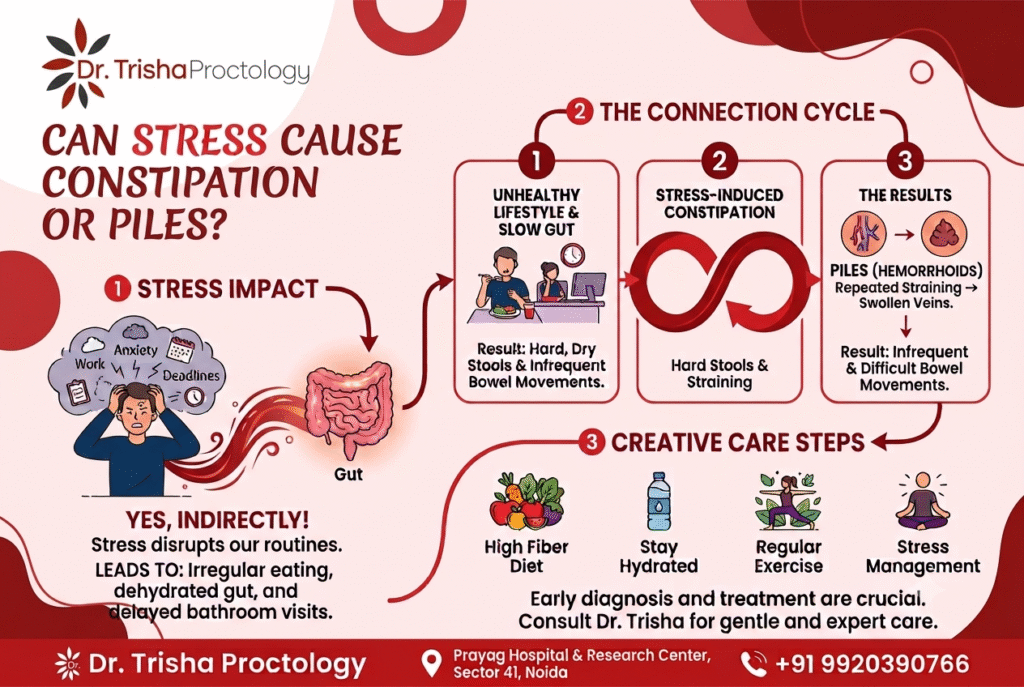
The simple answer is yes but indirectly. Stress itself does not directly cause piles or anal fissures. However, it can contribute to constipation, and constipation is one of the most common reasons people develop these painful conditions. Understanding this connection can help you recognize the warning signs early and take the right steps to prevent complications.
Can Stress Cause Constipation?
Yes, stress can contribute to constipation in many people. During periods of stress, everyday routines often change without us even realizing it. You may start skipping meals, relying on fast food, drinking less water, staying seated for long hours, sleeping poorly, or delaying bathroom visits because you’re too busy. These seemingly small changes can have a significant impact on your bowel movements.
Constipation is not simply about missing a day of passing stools. It is generally characterized by infrequent bowel movements, hard or dry stools, difficulty passing stools, excessive straining, or a feeling that the bowel has not emptied completely. Some people may also experience bloating or discomfort in the abdomen.
While occasional constipation is common and usually improves on its own, frequent or persistent constipation should never be ignored. If left untreated, it can put extra pressure on the anal area and increase the risk of developing piles or anal fissures.
Can Stress Cause Piles?
Stress does not directly cause piles, but it can certainly increase the chances of developing them.
Piles, also known as hemorrhoids, are swollen veins in or around the anus. One of the leading causes of piles is repeated straining during bowel movements. When constipation develops, passing stools often becomes difficult, forcing people to strain harder than usual. This repeated pressure on the veins around the anus can cause them to swell, eventually leading to piles.
The longer constipation continues, the greater the pressure placed on these veins. Spending a long time sitting on the toilet while trying to pass stools can also worsen the problem. Although piles may start as a minor discomfort, they can gradually become more painful if not treated at an early stage.
Common symptoms of piles include bright red bleeding during bowel movements, itching around the anus, pain or discomfort while passing stools, swelling, or a small lump near the anal opening. Some people may also notice mucus discharge or feel as though something is protruding after a bowel movement. Ignoring these symptoms can allow the condition to progress, making treatment more difficult later on.
Can Stress Cause Anal Fissures?
Similar to piles, stress does not directly cause anal fissures. However, it can increase the likelihood of developing one by contributing to constipation.
An anal fissure is a small tear in the delicate lining of the anus. It most commonly occurs when a person passes hard, dry, or large stools. When constipation becomes frequent, the chances of this tear developing increase significantly.
Unlike piles, anal fissures are often associated with severe pain. Many people describe the pain as sharp, burning, or cutting, especially during bowel movements. The pain may continue for several minutes or even hours after passing stools, making every visit to the toilet uncomfortable.
Other common symptoms include bright red blood on toilet paper, irritation around the anus, and a visible crack near the anal opening. Because bowel movements become painful, many people begin delaying or avoiding going to the toilet. Unfortunately, this causes stools to become even harder, making the next bowel movement more painful and slowing down the healing process.
How Are Stress, Constipation, Piles, and Anal Fissures Connected?
Although stress may seem unrelated to these conditions, the connection becomes much clearer when you look at the sequence of events.
Stress often leads to unhealthy lifestyle habits, such as eating irregularly, drinking less water, getting inadequate sleep, and delaying bowel movements. These changes increase the likelihood of constipation.
Once constipation develops, passing stools requires more effort. Continuous straining places excessive pressure on the veins around the anus, increasing the risk of piles. At the same time, hard stools can stretch and tear the lining of the anus, resulting in an anal fissure.
In many cases, the pain caused by piles or fissures creates anxiety about passing stools. This fear may lead people to postpone bowel movements, making constipation worse and creating a cycle that becomes increasingly difficult to break.
How Can You Reduce the Risk?
The good news is that a few simple lifestyle changes can go a long way in preventing constipation and reducing the chances of developing piles or anal fissures.
Start by eating a balanced diet that includes plenty of fiber-rich foods such as fruits, vegetables, whole grains, oats, lentils, and beans. Fibre helps soften stools, making them easier to pass without excessive straining.
Drinking enough water throughout the day is equally important. Proper hydration helps prevent stools from becoming hard and dry, reducing the risk of constipation.
Regular physical activity can also support healthy bowel movements. Even a brisk walk for 30 minutes a day can make a noticeable difference. If you spend long hours sitting at work, try to take short breaks and move around whenever possible.
Managing stress is another important step. While it may not always be possible to eliminate stress completely, activities such as deep breathing exercises, meditation, yoga, regular exercise, reading, listening to music, or getting enough sleep can help reduce its impact on your daily routine.
It is also important not to ignore the urge to pass stools. Delaying bowel movements allows stools to become harder, making them more difficult and painful to pass later. Avoid excessive straining, as it increases pressure on the anal area and raises the risk of both piles and anal fissures.
When Should You See a Doctor?
Occasional constipation is usually not a cause for concern. However, you should consult a doctor if constipation lasts for more than two weeks, if you experience frequent bleeding during bowel movements, severe pain while passing stools, a lump around the anus, or recurring symptoms despite making lifestyle changes.
Seeking medical advice early can help identify the underlying cause and prevent the condition from becoming more severe. Many people delay treatment because they feel embarrassed, but early care often leads to quicker recovery and better outcomes.
Why Choose Dr. Trisha for the Treatment of Constipation, Piles, and Anal Fissures?
Living with constipation, piles, or an anal fissure can affect your comfort, confidence, and daily routine. Many people delay seeking treatment due to embarrassment or the hope that the problem will resolve on its own. Unfortunately, postponing treatment can allow the condition to worsen and may lead to unnecessary pain or complications.
Dr. Trisha is committed to providing compassionate, confidential, and patient-focused care for individuals dealing with anorectal conditions. With expertise in diagnosing and treating constipation, piles, anal fissures, fistulas, and other colorectal concerns, she focuses on identifying the root cause of your symptoms rather than simply treating them temporarily.
Every patient receives a thorough evaluation and a personalized treatment plan based on their condition, lifestyle, and overall health. Whether your symptoms are mild, recurring, or causing significant discomfort, Dr. Trisha works closely with you to recommend the most appropriate treatment options while ensuring you feel informed and comfortable throughout your care.
Her approach emphasizes early diagnosis, evidence-based treatment, and long-term relief, helping patients return to their normal lives with confidence. If you’ve been experiencing persistent constipation, bleeding, pain while passing stools, or discomfort around the anal area, don’t ignore the warning signs. Seeking expert medical advice at the right time can make all the difference.
Take the first step towards better health by scheduling a consultation with Dr. Trisha. With timely diagnosis, compassionate care, and personalized treatment, you can find lasting relief and improve your quality of life.
Conclusion
Stress may not directly cause constipation, piles, or anal fissures, but it can certainly increase the risk by contributing to constipation and repeated straining during bowel movements. Over time, this combination can lead to swollen veins around the anus or small tears in the anal lining, resulting in pain, bleeding, and discomfort.
The best way to reduce your risk is to maintain healthy bowel habits, eat a fiber-rich diet, stay well hydrated, remain physically active, and find healthy ways to manage stress. Paying attention to these simple habits can go a long way in preventing constipation and its complications.
If you are experiencing persistent constipation, bleeding, pain, or discomfort during bowel movements, don’t wait for the symptoms to become severe. Early consultation with Dr. Trisha can help identify the cause, provide effective treatment, and prevent further complications, allowing you to regain your comfort and quality of life with confidence.