
Introduction:
Common Myths About Piles, Fissure, and Fistula are among the most common anorectal conditions, yet they remain shrouded in embarrassment and misinformation. Many people suffer silently due to myths that prevent them from seeking timely care. If you experience bleeding, pain, or discharge during bowel movements, understanding the facts can make a significant difference to your health and quality of life.
Dr. Trisha Rai, a leading piles specialist in Noida, regularly encounters patients who delayed treatment because of widespread misconceptions. With advanced options like laser piles treatment in Noida, most cases can now be managed effectively with minimal discomfort and quick recovery. Let’s bust the most persistent myths and separate fact from fiction.
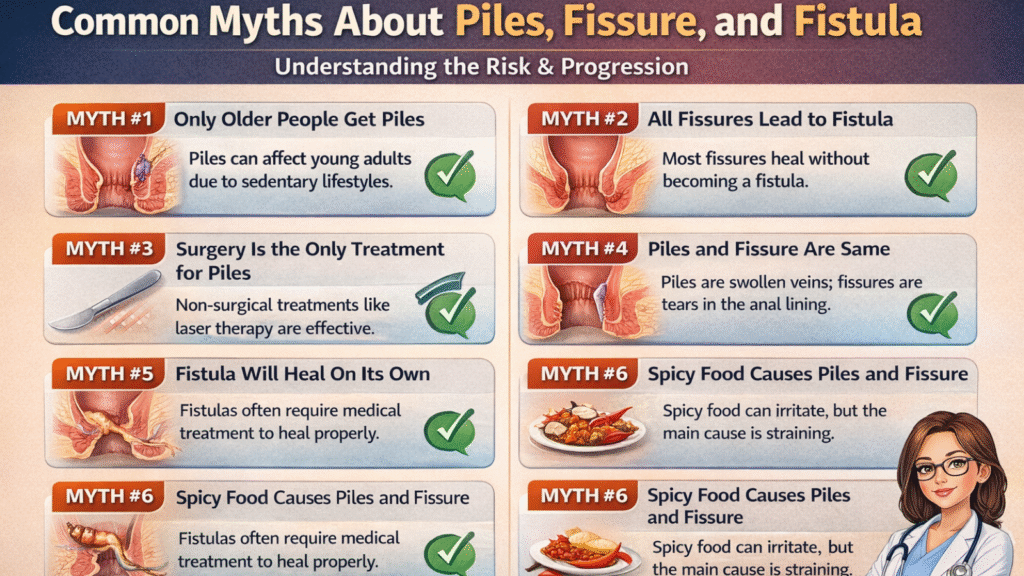
Myth 1: Piles, Fissure, and Fistula Are the Same Condition
One of the biggest misconceptions is that all anal problems are simply “piles.” In reality, these are three distinct conditions:
- Piles (Hemorrhoids): Swollen blood vessels in the rectal or anal area, often causing painless bleeding or prolapse.
- Anal Fissure: A small tear in the lining of the anus, typically causing severe pain during and after defecation.
- Anal Fistula: An abnormal tunnel connecting the anal canal to the skin surface, usually resulting from a previous abscess and leading to recurrent pus discharge.
Confusing them can lead to wrong self-treatment. Accurate diagnosis by an experienced specialist is essential. Dr. Trisha Rai emphasizes thorough clinical examination and, when needed, imaging to differentiate these conditions clearly.
Myth 2: These Conditions Only Affect Older People
Many believe piles, fissures, and fistulas are problems of the elderly. The truth is they can affect anyone, including young adults and even teenagers. Sedentary lifestyles, low-fiber diets, chronic constipation, pregnancy, obesity, and straining during bowel movements are major risk factors across all age groups. Office workers who sit for long hours are particularly prone. Ignoring symptoms, thinking “I’m too young,” often allows the condition to worsen.
Myth 3: These Problems Always Require Major Surgery
A common fear is that surgery is inevitable and extremely painful. While some advanced or recurrent cases may need intervention, many patients respond well to conservative management:
- A high-fiber diet, adequate hydration, and stool softeners often heal acute fissures.
- Lifestyle changes and medications control early-grade piles effectively.
For those requiring procedures, modern techniques have transformed outcomes. Laser piles treatment in Noida is a game-changer—minimally invasive, performed as a day-care procedure, with negligible bleeding and discomfort. Patients typically resume normal activities within 2–3 days, far quicker than traditional open surgery.
Myth 4: These Conditions Heal Completely on Their Own
Fissures may heal with conservative care if acute, but chronic fissures and most fistulas rarely resolve without proper treatment. Fistulas, in particular, almost never heal spontaneously because the tract remains open and continues to harbor infection. Delaying care can lead to multiple tracts, abscess formation, or more complex disease, making later treatment more challenging.
Myth 5: Pain Is Always Present (or Absent)
Not all piles cause pain internal hemorrhoids often present only with bleeding. Conversely, anal fissures are notoriously painful, while fistulas may cause intermittent discomfort with pus discharge. Assuming “no pain means no problem” leads many to ignore bleeding or swelling until complications arise. Any rectal bleeding should be evaluated to rule out serious causes.
Myth 6: Spicy Food, Cold Surfaces, or Poor Hygiene Are the Main Causes
Spicy foods may irritate symptoms but do not cause these conditions. Sitting on cold floors or poor hygiene myths are equally unfounded. Primary triggers include constipation, prolonged straining, a low-fiber diet, pregnancy, and certain medical conditions like Crohn’s disease (for fistulas). Good hygiene helps prevent secondary infection but is not the root cause.
Myth 7: Surgery Means Long, Painful Recovery and High Recurrence
Traditional open surgeries did involve weeks of painful healing, but advanced laser techniques have changed this dramatically. With laser piles treatment in Noida, recovery is swift most patients experience minimal post-operative pain managed by simple analgesics. Hospital stay is often same-day or overnight, and recurrence rates are significantly lower when performed by experts.
For fistula, specialized techniques at advanced centers also offer better outcomes with reduced morbidity.
Why Timely Treatment Matters and Where to Seek Help
Ignoring these conditions can lead to chronic pain, infection, anemia from repeated bleeding, or even incontinence in neglected fistula cases. Early consultation prevents progression and allows simpler treatment options.
Patients in the region seeking reliable care often turn to the best fistula treatment in Noida and advanced facilities recognized among the best hospitals for fistula treatment. Dr. Trisha Rai practices at such centers, offering personalized plans from conservative management to laser procedures tailored to each patient’s condition and lifestyle.
Her expertise as a piles specialist Dr. in Noida ensures accurate diagnosis and the most appropriate, least invasive solution. Whether it’s dietary counseling for fissures, laser ablation for piles, or advanced fistula management, the focus remains on quick relief and long-term prevention.
Prevention Tips Backed by Facts
- Eat a high-fiber diet (fruits, vegetables, whole grains) and drink plenty of water.
- Avoid straining and prolonged sitting on the toilet.
- Exercise regularly to improve bowel habits.
- Maintain healthy weight.
- Seek prompt medical advice for any anorectal symptoms instead of relying on home remedies or over-the-counter creams long-term.
Conclusion
Myths about piles, fissures, and fistulas create unnecessary fear and delay, often turning manageable conditions into chronic problems. The reality is reassuring: most cases can be treated effectively, many without surgery, and modern laser options like laser piles treatment in Noida offer excellent results with minimal downtime.
If you or a loved one is experiencing symptoms, don’t let misconceptions hold you back. Consult an experienced piles specialist doctor in Noida for accurate diagnosis and compassionate care at the best hospitals for fissure treatment. Dr. Trisha Rai and her team are committed to helping patients regain comfort and confidence through evidence-based, patient-friendly approaches.
Take the first step toward relief; schedule a consultation today and discover how simple, effective treatment can transform your life.
Frequently Asked Questions (FAQs)
-
Can piles, fissures, or fistulas turn into cancer?
No. These are benign conditions. However, rectal bleeding can sometimes indicate other serious issues like colorectal cancer. Always get evaluated by a specialist to rule out other causes.
-
Is laser piles treatment in Noida safe and effective?
Yes. Laser piles treatment is minimally invasive, causes less pain and bleeding, and allows faster recovery compared to conventional surgery. Success rates are high when performed by experienced surgeons.
-
How long does recovery take after the best fissure treatment in Noida?
Acute fissures often heal within 4–6 weeks with conservative measures. Chronic fissures or those requiring minor procedures usually show significant improvement much faster with proper medical management.
-
Do fistulas always need surgery?
Most anal fistulas require definitive treatment, often surgical, because they rarely heal on their own. Advanced techniques at the best hospitals for fistula treatment help minimize recurrence and complications.
-
Will I have to take a long leave from work after treatment?
With modern laser piles treatment in Noida, most patients resume desk jobs within 2–3 days. Even for fissure or fistula management, downtime is significantly shorter than older methods.
-
How can I find the right piles specialist Dr. in Noida?
Look for a colorectal or general surgeon experienced in both conservative and advanced laser techniques, practicing at reputed hospitals. Patient reviews, clear communication, and personalized care plans are important indicators. Dr. Trisha Rai is trusted by many for her expertise and patient-centric approach.