
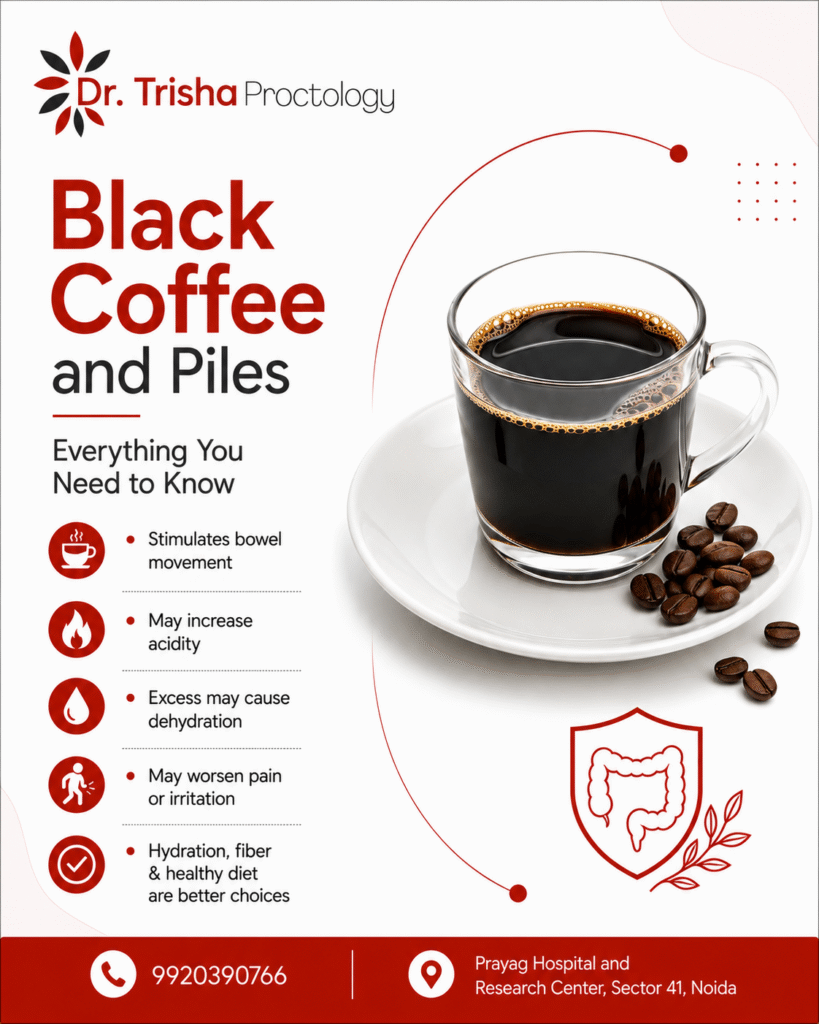
Coffee is one of the most commonly consumed beverages, and many people start their day with a cup of black coffee. But if you have piles or frequently experience constipation, you may wonder: does black coffee cause piles?
Black coffee is not considered a direct cause of hemorrhoids. However, caffeine can affect bowel movements differently from person to person. For some people, coffee may stimulate the urge to pass stool, while excessive caffeine intake or drinking too little water may contribute to digestive discomfort or changes in bowel habits.
Piles, also known as hemorrhoids, are swollen veins in or around the anus. Constipation, hard stools, repeated straining, and prolonged sitting on the toilet are among the factors that can contribute to hemorrhoid symptoms.
Dr. Trisha Rai, a General Surgeon and Proctologist, provides evaluation and treatment for piles and other proctological conditions. If you regularly experience bleeding, pain, itching, or swelling around the anus, a proper consultation can help identify the cause of your symptoms.
What Are Piles?
Piles, medically known as hemorrhoids, are swollen and enlarged veins in the lower rectum or around the anus. They can occur inside the rectum as internal hemorrhoids or beneath the skin around the anus as external hemorrhoids.
Common symptoms of piles include:
- Bright-red bleeding during or after bowel movements
- Itching or irritation around the anus
- Pain or discomfort
- Swelling around the anal opening
- A lump near the anus
- Difficulty or discomfort while sitting
The symptoms can vary depending on the type and severity of hemorrhoids.
Does Black Coffee Cause Piles?
No, black coffee does not directly cause piles. There is no simple cause-and-effect relationship between drinking black coffee and developing hemorrhoids.
However, coffee can influence bowel habits. Caffeine may stimulate bowel activity in some people, while excessive coffee consumption can cause digestive symptoms in others.
The bigger concern for someone prone to piles is whether their coffee-drinking habits are contributing to constipation, diarrhoea, dehydration, or repeated irritation during bowel movements.
Therefore, if you notice that your symptoms become worse after drinking several cups of coffee, reducing your intake and observing how your body responds may be helpful.
How Can Coffee Affect Your Bowel Movements?
Coffee can influence the digestive system in several ways.
Coffee May Stimulate the Bowel
Caffeine and other compounds in coffee can stimulate bowel activity. Some people feel the urge to use the toilet shortly after drinking coffee.
For someone with regular bowel movements, this may not be a problem. However, people with sensitive digestion may notice changes in stool frequency or consistency.
Too Much Coffee May Cause Digestive Discomfort
Large amounts of coffee may cause symptoms such as stomach discomfort, urgency, or loose stools in some individuals.
Frequent diarrhoea can irritate the anal area and may make existing hemorrhoid symptoms more uncomfortable.
Coffee Should Not Replace Water
If someone drinks several cups of coffee but does not consume enough fluids overall, their hydration may become inadequate.
Maintaining adequate fluid intake is particularly important when trying to prevent constipation and hard stools.
Can Coffee Make Piles Worse?
Coffee does not necessarily make piles worse for everyone. The effect depends on how your body responds to caffeine and how much coffee you consume.
If drinking black coffee leads to:
- Constipation
- Loose stools
- Frequent bowel movements
- Abdominal discomfort
- Increased urgency
- Irritation around the anus
then reducing your coffee intake may help improve your bowel habits.
If coffee does not cause any digestive problems, there may not be a need to completely avoid it simply because you have piles.
What Causes Piles?
Piles generally develop when increased pressure is placed on the veins around the anus and lower rectum.
Common contributing factors include:
- Chronic constipation
- Hard stools
- Repeated straining
- Prolonged sitting on the toilet
- Frequent diarrhoea
- Pregnancy
- A low-fibre diet
- Being overweight
- Spending long periods sitting or standing
- Increasing age
Coffee itself is not considered a primary cause of hemorrhoids.
Should You Stop Drinking Black Coffee If You Have Piles?
Not necessarily. If you enjoy black coffee and it does not cause constipation, diarrhoea, or other digestive problems, moderate consumption may not need to be stopped solely because of piles.
However, if you notice a clear connection between coffee and worsening bowel symptoms, you can try reducing the amount you drink and monitor whether your symptoms improve.
It is also important to maintain adequate hydration and a fibre-rich diet.
What Can You Drink Instead of Excessive Coffee?
If you are trying to reduce your caffeine intake, suitable alternatives may include:
- Plain water
- Warm water
- Caffeine-free herbal beverages
- Other non-caffeinated drinks recommended according to your individual health needs
The most important goal is to maintain healthy hydration and bowel habits rather than focusing on one specific beverage.
How Can You Prevent Piles From Getting Worse?
Whether or not you drink coffee, certain bowel habits can help reduce irritation and pressure around the anal area.
Eat Enough Fibre
Fruits, vegetables, whole grains, oats, beans, and legumes can help provide dietary fibre and support regular bowel movements.
Drink Adequate Fluids
Adequate hydration can help prevent stools from becoming excessively hard.
Avoid Straining
Try not to force bowel movements. Excessive straining can increase pressure on the hemorrhoidal veins.
Do Not Sit on the Toilet for Too Long
Spending unnecessary time on the toilet can increase pressure around the anal area. Try to keep toilet visits reasonably brief.
When Should You See a Piles Specialist?
Occasional mild symptoms may improve with changes in bowel habits, but persistent symptoms should not be ignored.
Consider consulting a specialist if you experience:
- Repeated rectal bleeding
- Severe or persistent anal pain
- A painful lump around the anus
- Frequent piles flare-ups
- Symptoms that do not improve
- Difficulty passing stool
- Bleeding that continues or becomes heavier
Rectal bleeding can have several causes, so it should not automatically be assumed to be piles.
Dr. Trisha Rai can evaluate your symptoms and determine whether hemorrhoids are responsible or whether further assessment is needed.
How Are Piles Treated?
Treatment depends on the type and severity of hemorrhoids.
Mild symptoms may improve with dietary and bowel-habit changes. Depending on the condition, a doctor may also recommend medication or other procedures.
For hemorrhoids that require intervention, Laser Piles Treatment may be considered for selected patients after proper evaluation.
Dr. Trisha Rai can assess the severity of piles and discuss the available treatment options based on your individual condition.
Conclusion
So, does black coffee cause piles? Black coffee is not considered a direct cause of hemorrhoids. However, excessive coffee consumption may affect bowel movements in some people and could indirectly contribute to problems such as constipation, loose stools, or digestive irritation.
If you have piles, focus on maintaining regular and comfortable bowel movements, eating enough fibre, drinking adequate fluids, and avoiding excessive straining. If you notice that coffee consistently makes your symptoms worse, reducing your intake may be worth considering.
If bleeding, pain, swelling, or recurrent piles symptoms continue despite lifestyle changes, consult Dr. Trisha Rai for a proper evaluation and suitable Piles Treatment in Noida.