
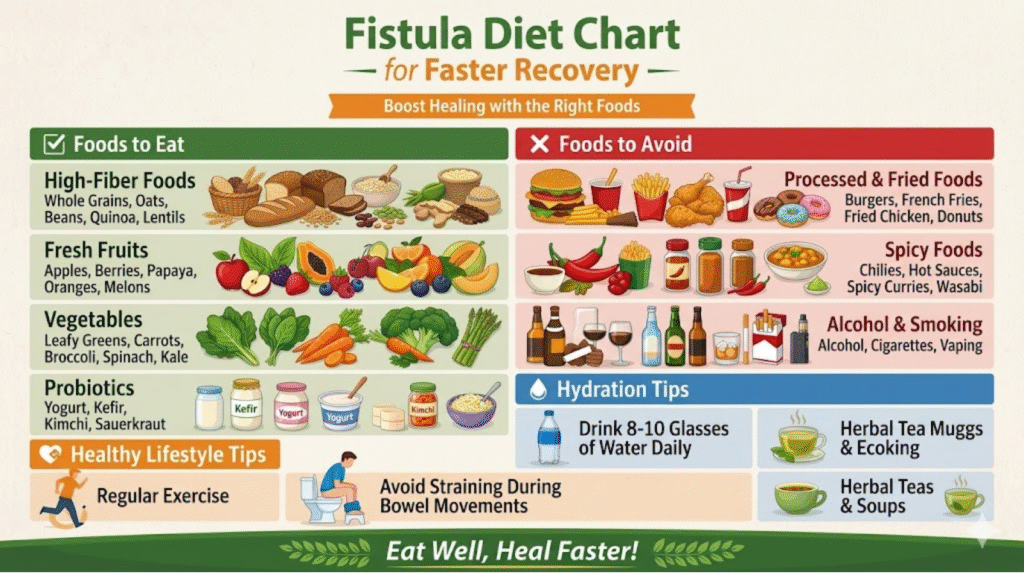
Recovering from an anal fistula (fistula-in-ano) requires more than just medical treatment. What you eat plays a crucial role in preventing constipation, reducing strain during bowel movements, promoting healing, and minimizing recurrence. A well-planned fistula diet chart focuses on high-fiber foods, adequate hydration, and anti-inflammatory choices while avoiding items that harden stools or irritate the area.
Dr. Trisha Rai, the best female proctologist in Noida, has guided thousands of patients through successful recovery from fistula using advanced techniques like laser treatment for fistula in Noida. Proper diet accelerates healing after any procedure, whether conservative management or laser/surgery, by ensuring soft, easy-to-pass stools and supporting tissue repair.
This detailed guide includes a practical daily fistula diet chart, foods to eat and avoid, sample meal plans, and lifestyle tips for faster recovery.
Why Diet Matters in Fistula Recovery
Anal fistula is an abnormal tunnel between the anal canal and skin, often resulting from an infected anal gland. After treatment (especially laser or surgical), the healing wound is sensitive. Straining due to hard stools can reopen the tract, delay recovery, or cause recurrence.
Key goals of a fistula diet:
- Achieve 25-35 grams of dietary fiber daily to soften stools
- Prevent constipation and straining
- Reduce inflammation around the anal area
- Support immunity and wound healing with nutrients
- Maintain hydration (3- 4 liters of fluids daily)
Patients who follow a structured diet after laser treatment report quicker pain relief, fewer complications, and smoother recovery compared to those who don’t.
Foods to Eat for Faster Fistula Healing
Focus on these nutrient-dense, high-fiber options:
High-Fiber Cereals & Grains:
Oats, oatmeal, brown rice, quinoa, broken wheat (dalia), ragi, and whole wheat products. These provide soluble and insoluble fiber for bulk and softness.
Pulses & Legumes:
Moong dal, masoor dal, chickpeas (chana), kidney beans (rajma in moderation), and soybeans. Easy to digest when cooked well.
Vegetables:
All gourds (bottle gourd/lauki, ridge gourd, snake gourd, and bitter gourd), spinach, carrots, cauliflower, broccoli, lady’s fingers (okra), and green leafy vegetables. Steam or lightly cook to retain nutrients.
Fruits:
Papaya, banana, apple (with skin), pear, oranges, watermelon, grapes, custard apple. These are rich in fiber and natural sugars that aid digestion. Prunes or figs (soaked) are excellent natural laxatives.
Probiotic & Dairy Options (in moderation):
Yogurt (curd), buttermilk (chaas), skim milk, and paneer. Probiotics support gut health and prevent diarrhea or constipation.
Healthy Proteins & Fats:
Lean fish (salmon, tuna for omega-3), eggs, skinless chicken (occasionally), nuts/seeds like flaxseeds and chia seeds (ground), olive oil, or mustard oil (5 tbsp/day max).
Other Healing Foods:
Turmeric (anti-inflammatory), ginger, warm soups, herbal teas.
Drink plenty of water, coconut water, or herbal infusions. Warm water with lemon in the morning kickstarts digestion.
Foods to Strictly Avoid During Recovery
These can cause constipation, irritation, or inflammation:
- Spicy & Oily Foods: Chilies, hot sauces, pickles, fried snacks (samosa, pakora), fast food.
- Processed & Junk Foods: Chips, packaged snacks, white bread, pastries, sugary items, frozen meals.
- Red Meat & Heavy Proteins: Excessive mutton, beef, and processed meats are hard to digest and constipating.
- High-Fat Dairy: Full-cream milk, cheese, cream, and ice cream (limit; opt for low-fat).
- Refined Foods: White rice, maida-based items, excessive sweets.
- Others: Caffeine-heavy drinks (limit coffee/tea), alcohol, carbonated beverages.
Avoid these, especially in the first 2–4 weeks post-laser treatment for fistula in Noida or surgery, to prevent discomfort.
Sample 7-Day Fistula Diet Chart for Faster Recovery
Daily Essentials:
- 3-4 liters water
- 25-35g fiber (increase gradually to avoid bloating)
- Warm sitz baths 2-3 times daily
- Light walking after meals
Day 1-3 (Early Recovery Soft & Bland Focus):
- Breakfast: Oatmeal with mashed banana + ground flaxseeds + yogurt.
- Mid-morning: Papaya or pear + buttermilk.
- Lunch: Moong dal khichdi with spinach + carrot salad + brown rice (small portion).
- Evening Snack: Apple + handful of soaked almonds.
- Dinner: Vegetable soup (lauki, carrot) + grilled fish or paneer + quinoa.
- Bedtime: Warm milk with turmeric (haldi doodh) or warm water.
Day 4-7 (Building Fiber):
- Breakfast: Ragi porridge or broken wheat upma with vegetables + orange.
- Mid-morning: Smoothie (banana, spinach, yogurt, chia seeds).
- Lunch: Brown rice + mixed dal (moong + masoor) + steamed broccoli/cauliflower + salad.
- Evening Snack: Watermelon or grapes + roasted chickpeas.
- Dinner: Whole wheat roti (1–2) + bottle gourd sabzi + yogurt.
- Bedtime: Herbal tea or soaked figs.
- Continue this pattern long-term, adjusting portions. For vegetarians, increase pulses and dairy alternatives.
- Patients following similar plans after visiting a fistula specialist in Noida heal faster with less pain.
Role of Laser Treatment Combined with Diet
While diet supports recovery, advanced treatment addresses the root issue. Laser treatment for fistula (like FiLaC or radial laser) is minimally invasive, sphincter-preserving, and offers:
- Day-care procedure with local anesthesia
- Minimal pain and no large wounds
- Faster healing (often within weeks)
- Lower recurrence when paired with proper diet
As the best fistula doctor in Noida, I recommend laser for the most suitable cases because it allows a quicker return to a normal diet and activities.
Additional Lifestyle Tips for Optimal Recovery
- Eat small, frequent meals to avoid overloading digestion.
- Chew food slowly and eat mindfully.
- Include mild exercise like walking (30 minutes daily) to stimulate bowels.
- Avoid prolonged sitting or straining on the toilet.
- Maintain hygiene and follow post-procedure instructions strictly.
- Monitor for any signs of infection and report promptly.
Consistency in diet for at least 4-6 weeks post-treatment yields the best results.
Conclusion:
A thoughtful fistula diet chart emphasizing high-fiber foods, hydration, and avoidance of irritants is your ally for faster, smoother recovery. Combined with modern treatments like laser treatment, you can minimize discomfort and return to daily life confidently. If you are experiencing fistula symptoms or recovering from treatment, don’t rely on guesswork. Consult an experienced Fistula specialist in Noida for personalized advice.
We provide compassionate, evidence-based care tailored to your needs. Early expert intervention and the right diet make all the difference.
FAQ – Frequently Asked Questions
- Why is a high-fiber diet important for fistula recovery?
High-fiber foods soften stools, prevent constipation, and reduce straining that can delay healing or cause recurrence. Aim for 25–35 grams daily.
- What foods should I eat after fistula laser treatment?
Include oats, brown rice, moong dal, papaya, banana, spinach, carrots, yogurt, and plenty of water. These promote soft bowel movements and healing.
- Who is the best fistula doctor in Noida?
Dr. Trisha Rai is recognized as the best female fistula doctor in Noida, offering advanced laser procedures and detailed dietary guidance.
- How effective is laser treatment for Fistula in Noida?
Laser treatment is highly effective, minimally invasive, with quick recovery, low pain, and reduced recurrence when supported by proper diet and care.
- What are the best hospitals for Fistula treatment in Noida?
Several hospitals offer treatment, but specialized clinics like Dr. Trisha Clinic provides focused proctology expertise, laser technology, and personalized post-treatment diet plans.
- Can I eat non-vegetarian food during fistula recovery?
Limit red meat; opt for lean fish, eggs, or chicken occasionally. Vegetarian high-fiber options are generally better for digestion.
- How much water should I drink daily with fistula?
At least 3-4 liters to keep stools soft and support fiber intake.
- When can I return to normal diet after fistula treatment?
Gradually after 2-4 weeks, but maintain high-fiber habits lifelong to prevent recurrence. Follow your Fistula specialist in Noida’s advice.
- Does diet alone cure fistula?
No. Diet supports healing and prevents complications, but medical treatment (preferably laser) from a Fistula doctor is essential to close the tract.