
An anal fissure is a small tear or crack in the lining of the anus, often causing sharp pain during or after bowel movements. It is a common proctology problem, especially in patients who experience constipation, prolonged straining, or hard stools. In my OPD, I frequently see fissures in both young adults and middle-aged patients, often linked to lifestyle, diet, and digestive irregularities.
Many patients notice fissures after dietary changes, travel, or disrupted bowel routines.
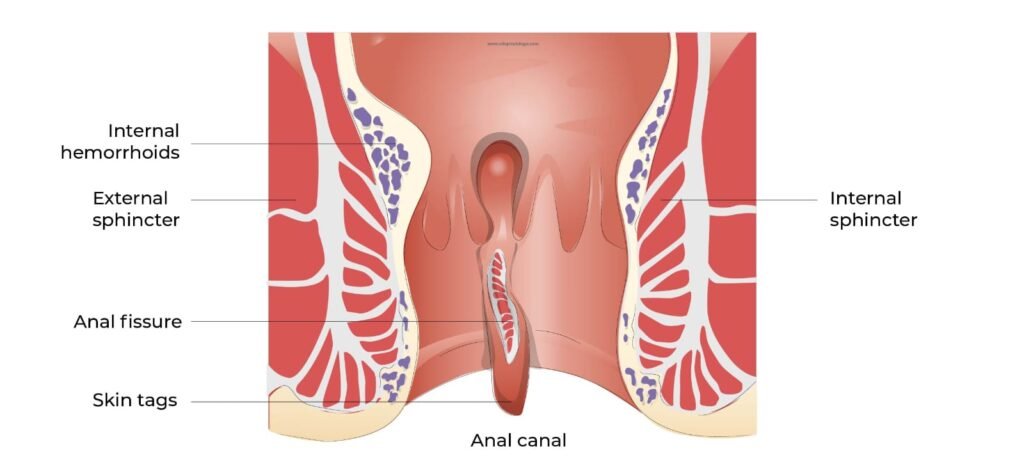
Acute Fissure: Recent tears causing intense pain and mild bleeding. Usually heal with conservative care within a few weeks.
Chronic Fissure: Last more than six weeks, often with scar tissue, sphincter spasm, or persistent pain and bleeding. Chronic fissures usually require procedural or surgical treatment.
Possible Complications if Untreated
Take the first step toward expert diagnosis and personalised treatment. Dr. Rai’s expertise ensures accurate assessment and the right solution for your condition.
Diagnosis is usually straightforward and involves careful visual examination. In my practice, I use gentle anoscopy or proctoscopy to assess the depth, location, and chronicity of the fissure, while also ruling out associated conditions like piles or fistulas.
1. Conservative Management
2. Procedural & Surgical Treatments
Lateral Internal Sphincterotomy (Closed or Open): For chronic fissures with persistent pain or sphincter spasm, a small portion of the internal anal sphincter is released to relieve tension and promote healing. Both closed and open techniques are safe and performed as day-care procedures, with minimal discomfort and rapid recovery.
Laser-Assisted Fissure Healing: Targeted laser therapy gently treats fissure tissue, promoting rapid healing, reducing pain, and minimizing recurrence.
Early consultation improves healing, reduces pain, and prevents chronic complications.
I adopt a personalized, patient-focused strategy for managing anal fissures. Each treatment plan combines dietary guidance, Ayurvedic support, and advanced procedural options such as laser therapy or lateral internal sphincterotomy (open/closed), tailored to the patient’s symptoms, fissure severity, and lifestyle. The goal is to ensure rapid relief, permanent healing, and minimal disruption to daily routine.
Take the first step toward expert diagnosis and personalised treatment. Dr. Rai’s expertise ensures accurate assessment and the right solution for your condition.
Everything you need to know before starting your treatment journey.
Modern Anorectal & General Surgery You Can Trust. With expertise in advanced laser-assisted procedures, Dr. Trisha focuses on minimally invasive care.
Copyright 2025. All Rights Reserved. Developed by Wand Weaver.
Copyright 2025. All Rights Reserved.
Developed by Wand Weaver.
WhatsApp us