
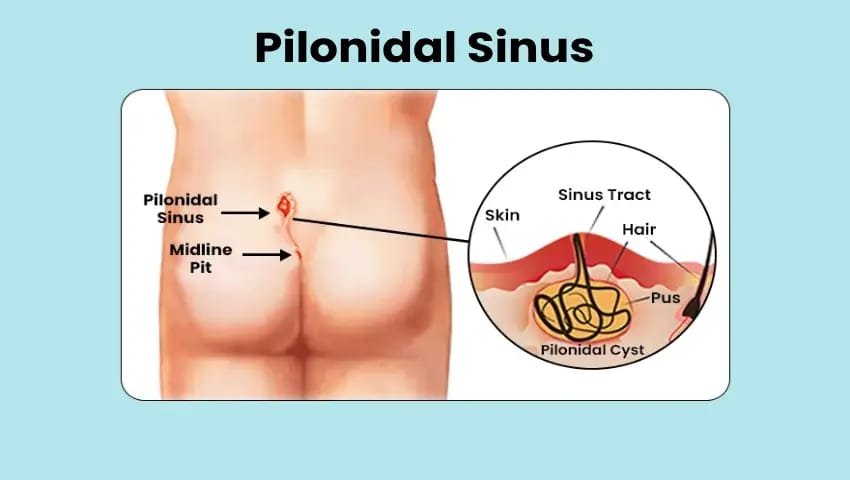
A pilonidal sinus is a small, abnormal tunnel or cavity in the skin near the tailbone (coccyx), often containing hair, debris, or pus. It commonly occurs in young adults, especially those with sedentary lifestyles, prolonged sitting, or excessive body hair. In my OPD, patients often report pain, swelling, or recurrent discharge, sometimes with abscess formation.
Take the first step toward expert diagnosis and personalised treatment. Dr. Rai’s expertise ensures accurate assessment and the right solution for your condition.
Early and accurate diagnosis ensures proper treatment planning and reduces recurrence risk.
1. Conservative & Supportive Care
Important: Conservative care may relieve discomfort temporarily but cannot cure a pilonidal sinus permanently. Surgical or procedural treatment is required for complete healing.
2. Surgical & Advanced Treatments
Incision & Drainage
For acute abscesses, pus is drained under local or general anesthesia.- Provides immediate relief but does not remove the underlying sinus tract.
Excision & Primary Closure
Complete removal of the sinus tract followed by wound closure. Faster healing and less recurrence compared to simple drainage.
Excision with Secondary Healing
The sinus tract is removed, and the wound is left open to heal gradually.
Reduces tension and recurrence risk, suitable for complex cases.
Flap Procedures (e.g., Limberg or Karydakis flap)
Advanced techniques for large or recurrent sinuses.
Tissue is repositioned to cover the defect, flattening the natal cleft and reducing recurrence.
Laser-Assisted Pilonidal Sinus Treatment (e.g., Diode Laser / Laser Ablation)
Minimally invasive laser therapy closes the sinus tract from inside.Promotes rapid healing, minimal scarring, and low recurrence.Can be combined with hair removal for best long-term results.
Early consultation prevents chronic infection, reduces recurrence, and minimizes disruption to daily life
I provide a comprehensive, patient-focused approach to pilonidal sinus management. Each treatment plan combines hygiene guidance, lifestyle modifications, and advanced procedures such as incision & drainage, excision with primary or secondary closure, flap surgery, or laser-assisted sinus ablation. The goal is permanent healing, minimal pain, rapid recovery, and prevention of recurrence.
Take the first step toward expert diagnosis and personalised treatment. Dr. Rai’s expertise ensures accurate assessment and the right solution for your condition.
Everything you need to know before starting your treatment journey.
Modern Anorectal & General Surgery You Can Trust. With expertise in advanced laser-assisted procedures, Dr. Trisha focuses on minimally invasive care.
Copyright 2025. All Rights Reserved. Developed by Wand Weaver.
Copyright 2025. All Rights Reserved.
Developed by Wand Weaver.
WhatsApp us