
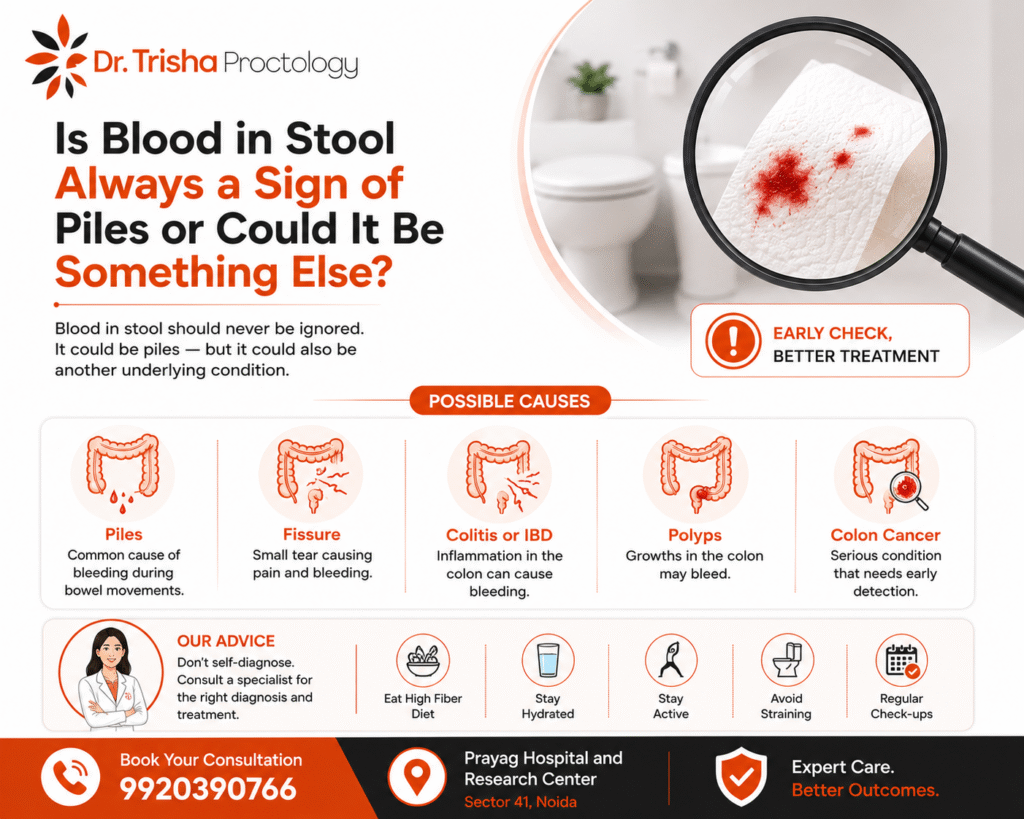
Is Blood in Stool Always a Sign of Piles or Could It Be Something Else? Seeing blood in your stool can be a frightening experience. For many people, the first thought is that it must be piles. While piles are one of the most common causes of rectal bleeding, they are not the only reason. Blood in the stool can sometimes be a warning sign of other digestive or colorectal conditions that need timely medical attention. Assuming the cause or delaying treatment can allow an underlying problem to become more serious. Understanding the possible causes and seeking an accurate diagnosis is essential for receiving the right treatment at the right time.
Dr. Trisha, one of the best female proctologist in Noida, believes that every patient deserves an accurate diagnosis before beginning treatment. With extensive experience in treating piles, fissures, fistulas, pilonidal sinus, and other colorectal conditions, she combines compassionate care with advanced laser technology to help patients recover comfortably while addressing the actual cause of their symptoms.
Why Blood in Stool Should Never Be Ignored
Blood in the stool is not a disease. It is a symptom that tells you something is happening inside your digestive tract. Sometimes the cause may be simple and easily treatable, while in other cases it may indicate a condition that requires further investigation.
The amount of blood, its color, and the symptoms that accompany it can offer important clues, but they cannot confirm the diagnosis. This is why self-diagnosis or internet searches should never replace a proper medical examination.
Piles Are Common but They Are Not the Only Cause
Piles develop when the veins inside or around the anus become swollen due to increased pressure. Constipation, prolonged sitting, obesity, pregnancy, and excessive straining during bowel movements are some of the common reasons behind this condition.
When these swollen veins become irritated, they may bleed during bowel movements. The blood is usually bright red and may appear on the toilet paper, in the toilet bowl, or on the surface of the stool. Some people also experience itching, discomfort, swelling, or a small lump around the anal area.
Although these symptoms are typical of piles, they should never be used to diagnose the condition without consulting a specialist because several other medical problems can present in a similar way.
An Anal Fissure Can Produce Similar Symptoms
An anal fissure is a small tear in the lining of the anal canal that usually occurs after passing hard stools. Unlike piles, fissures often cause severe pain during and after bowel movements along with bright red bleeding.
Many patients mistake a fissure for piles because the bleeding looks similar. However, the treatment for these two conditions is completely different. Identifying the exact cause is the first step towards long lasting relief.
Blood in Stool May Be Linked to Digestive Disorders
Inflammatory bowel diseases such as Crohn’s disease and ulcerative colitis can also cause blood in the stool. These conditions involve chronic inflammation of the digestive tract and are often accompanied by abdominal pain, diarrhea, fatigue, and weight loss.
Because these diseases require specialized medical management, they should never be overlooked or confused with piles.
Could It Be Something More Serious
Although less common, blood in the stool can sometimes be associated with colorectal polyps or colorectal cancer. Polyps are abnormal growths inside the colon or rectum that may develop into cancer over time if they are not treated.
Warning signs may include persistent bleeding, changes in bowel habits, unexplained weight loss, abdominal discomfort, or fatigue caused by anemia.
Finding these conditions early greatly improves treatment outcomes, which is why persistent rectal bleeding should always be evaluated by a qualified specialist.
Other Conditions That Can Cause Rectal Bleeding
There are several other medical conditions that may lead to blood in the stool. Diverticular disease, intestinal infections, and certain vascular abnormalities within the digestive tract can all result in rectal bleeding.
Although these conditions are less common, they remind us that not every episode of bleeding is related to piles. Proper diagnosis is essential because every condition requires a different treatment approach.
Can You Tell Whether the Blood Is Caused by Piles
Many people try to identify the cause based on the appearance of the blood alone. While bleeding from piles is usually bright red and often occurs during bowel movements, this is not enough to make a diagnosis.
Other symptoms such as itching, swelling, constipation, or discomfort may increase the possibility of piles, but only a thorough examination by an experienced proctologist can confirm the exact cause.
Rather than making assumptions, it is always safer to seek professional advice.
When Should You See a Doctor
You should never ignore rectal bleeding, especially if it happens more than once.
Medical attention should be sought immediately if the bleeding is heavy, if your stool appears dark or black, if you experience persistent abdominal pain, unexplained weight loss, weakness, dizziness, or changes in your normal bowel habits.
Even when the bleeding seems minor, getting it evaluated early can prevent unnecessary complications and provide peace of mind.
How the Cause Is Diagnosed
An accurate diagnosis begins with understanding your symptoms, medical history, and lifestyle. Depending on your condition, your doctor may recommend a physical examination along with investigations such as proctoscopy, anoscopy, colonoscopy, stool analysis, or blood tests.
These investigations help determine whether the bleeding is caused by piles, fissures, inflammatory bowel disease, polyps, or another digestive condition. Once the cause is identified, treatment can be planned accordingly.
Treatment Depends on the Actual Problem
There is no single treatment for blood in the stool because every patient is different.
Some conditions improve with dietary changes, medications, and healthier bowel habits, while others may require minimally invasive procedures or surgery.
Patients diagnosed with piles often benefit from laser treatment for piles in Noida, which offers less pain, minimal bleeding, faster recovery, and an earlier return to daily life compared to conventional surgery.
The most important goal is not simply stopping the bleeding but treating the underlying condition so that it does not return.
Healthy Habits Can Help Protect Your Digestive Health
Simple lifestyle changes can lower your risk of developing many anorectal conditions. Eating a fiber rich diet, drinking adequate water, staying physically active, avoiding prolonged sitting on the toilet, and preventing constipation all contribute to healthier bowel movements.
These habits support better digestive health and reduce unnecessary strain during bowel movements, helping lower the risk of piles and other related conditions.
Do Not Wait Until the Symptoms Become Worse
Many patients delay visiting a specialist because they feel embarrassed or believe the bleeding will stop on its own. Unfortunately, this often leads to delayed diagnosis and more complicated treatment.
Whether the cause turns out to be piles or another digestive condition, early medical attention almost always leads to better outcomes. The sooner the problem is identified, the sooner appropriate treatment can begin.
The Answer You Need Begins with the Right Diagnosis
Blood in your stool is not something you should ignore or try to diagnose yourself. It is your body’s way of asking for attention, and understanding the reason behind it is the first step towards protecting your health.
At Dr. Trisha Proctology, Dr. Trisha Rai believes that every patient deserves more than temporary relief. She believes in finding the real cause, explaining every treatment option clearly, and helping patients make informed decisions about their health. Whether your symptoms are caused by piles, a fissure, or another colorectal condition, you will receive personalized care backed by experience, advanced technology, and genuine compassion.
Your Peace of Mind Starts with One Consultation
Many people spend weeks worrying about what blood in the stool might mean. Instead of living with uncertainty, choose clarity. A timely consultation can provide answers, prevent complications, and help you begin the right treatment before the condition progresses.
If you have noticed blood during or after a bowel movement, now is the right time to seek expert advice. Schedule your consultation with Dr. Trisha Rai, one of the best female proctologists in Noida, and take the first step towards a healthier future.
Because when it comes to your health, the most valuable treatment always begins with the right diagnosis.