
Introduction
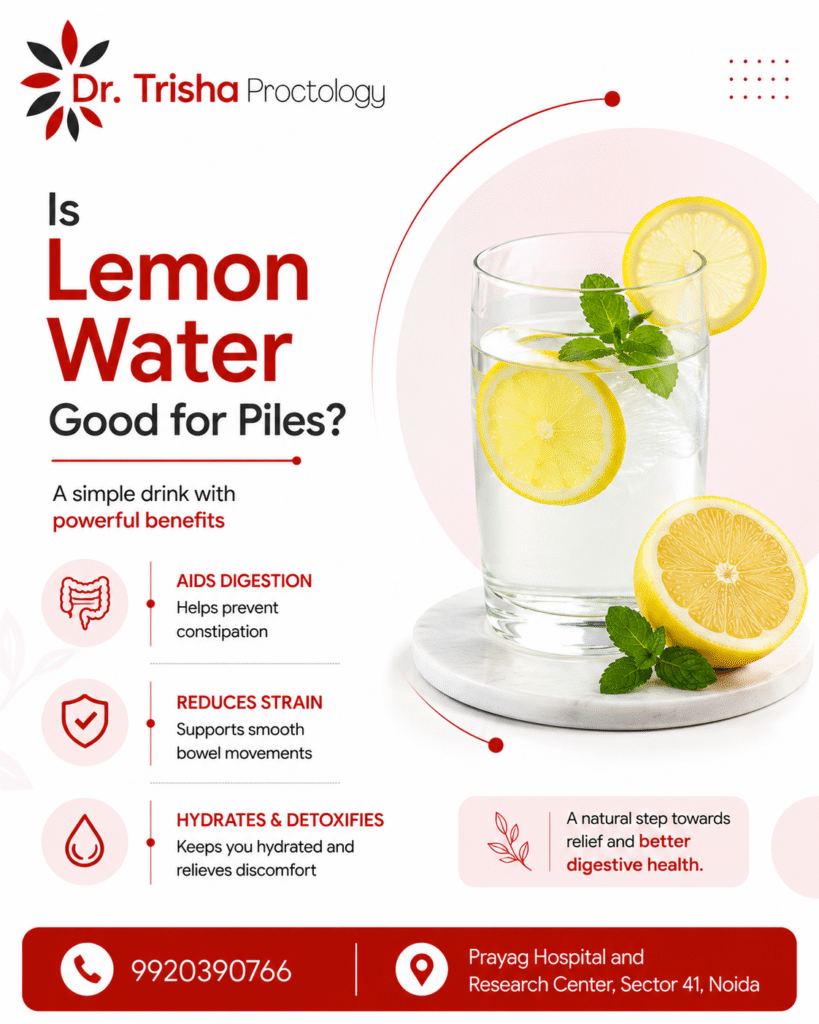
People with piles often look for simple home remedies and dietary changes that may help reduce discomfort. One common question is is lemon water good for piles? Lemon water is easy to prepare and is often included in daily routines for hydration and digestion, but it is important to understand what it can and cannot do for hemorrhoids.
Piles, also known as hemorrhoids, are swollen veins in or around the anus and lower rectum. Constipation and repeated straining during bowel movements can increase pressure on these veins and may worsen symptoms. Because staying hydrated is important for preventing hard stools, lemon water may be included as one way to increase your fluid intake.
However, lemon water does not directly cure piles or remove hemorrhoids. Its possible benefit is mainly related to hydration and its role as part of an overall healthy diet and lifestyle.
If you have persistent pain, repeated bleeding, or worsening symptoms, relying only on home remedies may delay appropriate treatment. Dr. Trisha Rai provides evaluation and treatment for piles and other colorectal conditions, helping patients understand the cause of their symptoms and choose suitable treatment options.
What Are Piles
Piles are swollen veins that can develop inside the rectum or around the anus. Internal piles occur inside the rectum, while external piles develop under the skin around the anus.
Symptoms can vary depending on the type and severity of the condition. Some people may experience itching, discomfort, swelling, pain, or bleeding during bowel movements.
Constipation, hard stools, repeated straining, prolonged sitting on the toilet, pregnancy, and other factors can contribute to the development or worsening of hemorrhoids.
Is Lemon Water Good for Piles
Lemon water may be a healthy addition to your routine if it helps you drink more fluids, but there is limited evidence to suggest that lemon water itself treats or cures piles.
Adequate hydration can support normal digestion and may help prevent stools from becoming excessively hard. This can be particularly important for people who experience constipation, as softer and easier-to-pass stools can reduce the need for straining.
Therefore, if you enjoy drinking lemon water, it can be included as part of your daily fluid intake. However, plain water is equally important, and lemon water should not be considered a replacement for proper treatment when piles cause persistent symptoms.
How Hydration Can Help People with Piles
One of the main reasons lemon water may be helpful is its contribution to overall hydration. When the body does not receive enough fluids, stools may become harder and more difficult to pass.
Hard stools can lead to repeated straining, which increases pressure on the veins around the rectum and anus. Maintaining adequate fluid intake can support softer stools, particularly when combined with enough dietary fibre.
Rather than relying on one specific drink, focus on staying hydrated throughout the day. Water, soups, and water-rich fruits can all contribute to your overall fluid intake.
Does Lemon Water Help with Constipation
Lemon water may help some people increase their fluid intake or establish a regular morning routine. However, there is not enough evidence to say that lemon water alone reliably treats constipation.
Constipation is influenced by many factors, including fibre intake, hydration, physical activity, medications, medical conditions, and bowel habits.
For better digestive support, focus on a combination of adequate fluids and fibre-rich foods such as fruits, vegetables, oats, whole grains, beans, and legumes.
If constipation is persistent, severe, or accompanied by concerning symptoms, it is important to seek medical advice.
Other Foods That May Support Healthy Bowel Movements
Instead of depending only on lemon water, include a variety of fibre-rich foods in your diet.
Fresh Fruits
Fruits such as apples, pears, papaya, berries, and other fibre-containing fruits can support your daily fibre intake. Eating a variety of fruits can also provide important vitamins and nutrients.
Vegetables
Vegetables can be an important source of dietary fibre. Leafy vegetables, carrots, beans, peas, and other vegetables can be included in regular meals.
Whole Grains
Oats, whole-wheat products, brown rice, and other whole grains can provide more fibre than many refined alternatives.
Seeds and Legumes
Foods such as flaxseeds, chia seeds, beans, lentils, and legumes can also contribute to fibre intake.
Increase fibre gradually and drink adequate fluids to help your digestive system adjust.
Can Lemon Water Make Symptoms Worse
For most people, drinking lemon water in moderate amounts may be well tolerated. However, individual responses can vary.
Some people may experience acidity, heartburn, or stomach discomfort after consuming acidic drinks. If lemon water consistently causes discomfort, it may be better to reduce the amount or avoid it.
Lemon water can also be acidic for tooth enamel, particularly when consumed frequently. Rinsing your mouth with plain water afterward and avoiding prolonged exposure may help reduce this effect.
If you have specific digestive or medical conditions, ask your doctor whether lemon water is appropriate for you.
Healthy Habits That Can Help Manage Piles
Managing piles often requires more than adding a single food or drink to your routine. Healthy daily habits can help reduce constipation and unnecessary pressure during bowel movements.
Eat Enough Fibre
Include a variety of fruits, vegetables, whole grains, beans, and other fibre-rich foods in your diet.
Drink Adequate Fluids
Stay hydrated throughout the day. The amount of fluid you need can vary depending on your health, activity level, and climate.
Avoid Straining
Do not force bowel movements. Repeated straining can increase pressure on the veins in the rectal area.
Do Not Delay Bowel Movements
When you feel the urge to use the toilet, try not to ignore it repeatedly.
Stay Physically Active
Regular movement can support healthy digestion and may help prevent constipation.
When Should You See a Specialist
Dietary changes and healthy habits can support digestive health, but they may not be enough when piles are persistent or severe.
You should seek medical advice if you experience frequent or heavy bleeding, severe pain, significant swelling, a painful lump, or symptoms that continue despite lifestyle changes.
Rectal bleeding should not automatically be assumed to be caused by piles, as other conditions can also cause bleeding. A proper medical evaluation is important to identify the actual cause.
Dr. Trisha Rai specializes in the diagnosis and management of piles and other colorectal conditions. A consultation can help determine the cause of your symptoms and identify the most appropriate treatment approach.
If your piles symptoms persist despite lifestyle changes, book an appointment with Dr. Trisha Rai for a professional evaluation and personalised treatment guidance.
Conclusion
So, is lemon water good for piles? Lemon water may be a useful addition to your routine if it helps you stay hydrated, but it is not a cure for hemorrhoids. Its potential benefit is mainly related to maintaining adequate fluid intake and supporting an overall healthy digestive routine.
For better bowel health, focus on a combination of adequate hydration, fibre-rich foods, regular physical activity, and healthy toilet habits. These steps may help prevent constipation and reduce the need for straining.
If your piles continue to cause pain, bleeding, or discomfort, do not rely solely on home remedies. Consult Dr. Trisha Rai for a proper evaluation and personalized guidance on suitable treatment options.