
Introduction
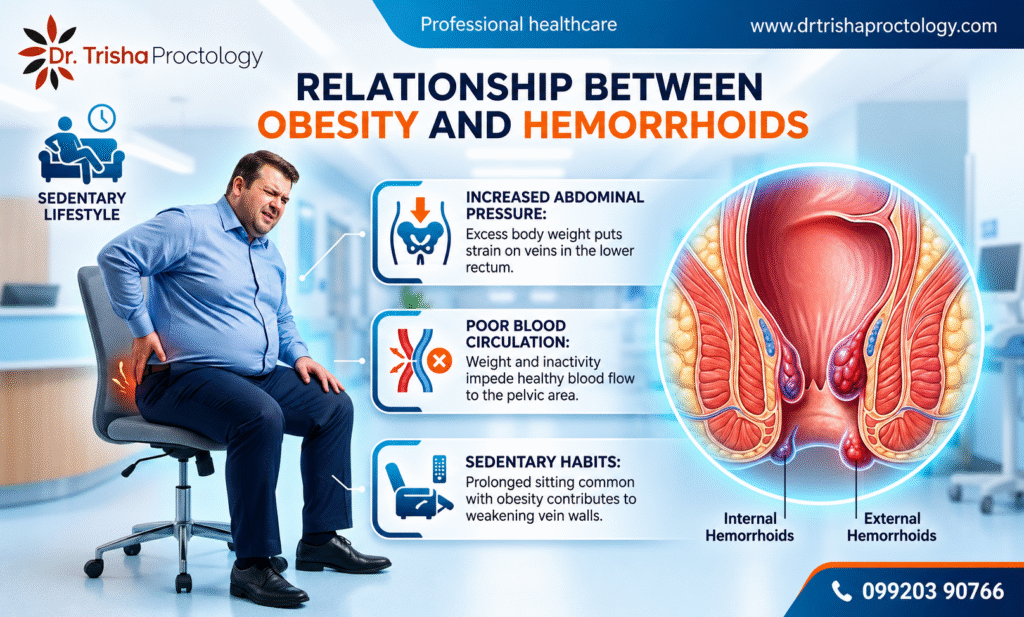
Understanding the relationship between obesity and hemorrhoids is essential for preventing long-term complications and improving overall digestive health. Maintaining a healthy weight through regular exercise, a fiber-rich diet, and adequate hydration can significantly reduce the risk of hemorrhoids. If you are experiencing symptoms such as bleeding, itching, or discomfort during bowel movements, timely consultation is important
Hemorrhoids, commonly known as piles, are one of the most prevalent anorectal conditions in the world. While many factors contribute to their development, obesity is one of the most significant and frequently overlooked risk factors. The relationship between excess body weight and hemorrhoid development is direct, multi-dimensional, and well-supported by medical research.
Dr. Trisha Rai, Noida’s trusted female proctologist, explains exactly how obesity causes and worsens hemorrhoids, why weight management is a crucial part of piles treatment and prevention, and what you can do to break this cycle.
Understanding Haemorrhoids
Hemorrhoids are swollen, inflamed veins located in the lower rectum or around the anal opening. They develop when the blood vessels and supporting tissues of the anal canal come under excessive and repeated pressure. Internal hemorrhoids develop inside the rectum and typically cause painless bleeding. External hemorrhoids develop under the skin around the anus and are often painful, itchy, and swollen.
Nearly 75% of people will experience hemorrhoids at some point in their lifetime. However, obese individuals develop hemorrhoids earlier, more severely, and more frequently than those who maintain a healthy body weight.
How Obesity Directly Causes Haemorrhoids
Increased Intra-Abdominal Pressure
Excess body weight, particularly abdominal fat, significantly increases intra-abdominal pressure. This pressure is transmitted directly to the veins of the lower rectum and anal canal. Sustained elevated pressure causes these veins to dilate, weaken, and eventually swell into hemorrhoids. This mechanism is similar to the pressure that causes varicose veins in the legs of overweight individuals.
Constipation and Straining
Obesity is strongly associated with reduced physical activity and a diet high in processed, low-fiber foods, both of which contribute to chronic constipation. Straining to pass hard stools is the single most common immediate trigger for hemorrhoid development, and obese individuals experience this trigger far more frequently than those with healthier body weight and lifestyle habits.
Prolonged Sitting
Many obese individuals find prolonged physical activity uncomfortable and spend more time sitting. Extended sitting, particularly on hard surfaces or the toilet, increases pressure on the anal vasculature and is a well-established risk factor for hemorrhoid development and worsening.
Weakened Connective Tissue
Obesity is associated with chronic low-grade systemic inflammation that weakens connective tissue throughout the body including the supporting structures of the anal canal. Weakened connective tissue means the veins of the anal canal are less well supported and more prone to dilation and prolapse.
Poor Dietary Habits
The dietary patterns most commonly associated with obesity high in refined carbohydrates, processed foods, and animal fat, low in fibre and water create exactly the bowel environment most conducive to hemorrhoid development. Hard stools, irregular bowel habits, and chronic constipation follow inevitably from these dietary patterns.
How Obesity Worsens Existing Haemorrhoids
For people who already have hemorrhoids, obesity makes them significantly worse in multiple ways. Continued elevated intra-abdominal pressure prevents existing hemorrhoids from shrinking. Ongoing constipation means repeated trauma to already-inflamed hemorrhoidal tissue. Reduced physical activity impairs the bowel motility that would otherwise help regulate stool consistency. Systemic inflammation associated with obesity slows the healing of irritated hemorrhoidal tissue. The physical difficulty of maintaining perineal hygiene that some obese individuals experience increases the risk of hemorrhoidal infection and thrombosis.
Breaking the Cycle: Weight Management and Haemorrhoid Treatment
The relationship between obesity and hemorrhoids is a true vicious cycle. Hemorrhoid pain makes physical activity uncomfortable, which reduces exercise, which worsens obesity, which worsens hemorrhoids. Breaking this cycle requires addressing both conditions simultaneously.
Dietary Modification: A high-fiber diet is essential for both hemorrhoid management and sustainable weight loss. Replacing processed foods with whole grains, fresh fruits, vegetables, and legumes simultaneously softens stools, reduces straining, and supports healthy body weight management.
Hydration: Drinking 8–10 glasses of water daily softens stools and supports both hemorrhoid healing and metabolic health.
Graduated Physical Activity Even modest increases in physical activity, starting with daily walking, improve bowel motility, reduce constipation, support weight management, and reduce intra-abdominal pressure over time.
Medical Hemorrhoid Treatment: Weight loss alone is rarely sufficient to resolve established hemorrhoids. Dr. Trisha Rai provides expert hemorrhoid treatment, including laser hemorrhoidoplasty for Grade 2, 3, and 4 hemorrhoids that delivers fast, effective relief while the patient works on sustainable weight management.
FAQ
Q: Can losing weight cure hemorrhoids?
A: Weight loss significantly reduces the risk factors that cause and worsen hemorrhoids. However, established hemorrhoids, particularly grades 3 and 4, typically require medical treatment in addition to weight management for complete resolution.
Q: How much weight loss is needed to improve hemorrhoid symptoms?
A: Even modest weight loss of 5–10% of body weight can meaningfully reduce intra-abdominal pressure and improve hemorrhoid symptoms. Combined with dietary changes that increase fiber intake, improvement can be significant.
Q: Is laser hemorrhoid treatment safe for obese patients?
A: Yes. Dr. Trisha Rai performs laser hemorrhoid treatment safely in patients of all body types. Pre-operative assessment ensures the procedure is appropriately planned for each individual patient.
Q: Does pregnancy-related weight gain cause hemorrhoids?
A: Yes. The combination of increased body weight, hormonal changes, and direct pressure on pelvic veins during pregnancy makes hemorrhoids extremely common. They often resolve partially after delivery but may require treatment if they persist.
Q: Can exercise alone prevent hemorrhoids in obese patients?
A: Exercise is an important preventive factor but works best as part of a comprehensive approach including dietary modification, adequate hydration, and healthy bowel habits.