
Introduction
Gentle, targeted exercises improve bowel motility, strengthen the pelvic floor, reduce constipation, and promote circulation to the anal area, all of which support faster healing. Dr. Trisha Rai, Noida’s female proctologist, recommends these top 5 exercises for fissure relief and healing in 2026.
When dealing with anal fissure, exercise is probably the last thing on your mind. Pain, bleeding, and fear of aggravating the condition make most patients want to rest completely. However, the right kind of exercise is not only safe during fissure recovery; it is actively beneficial.
Important Note Before You Begin
Always consult Dr. Trisha Rai before starting any exercise routine during fissure treatment. Avoid high-impact exercises like running, cycling, or weightlifting during the acute phase, as these can worsen the condition. The exercises below are specifically chosen for their gentle, therapeutic benefits.
Exercise 1: Walking
Walking is the single best exercise for fissure patients. It is low-impact, stimulates intestinal motility, reduces constipation, and improves overall circulation without putting any direct pressure on the anal area.
A 20–30 minute brisk walk daily is sufficient to significantly improve bowel regularity. Start slowly if you are in the early stages of recovery and gradually increase duration as comfort allows. Morning walks are particularly beneficial, as they stimulate the gastrocolic reflex, which promotes natural bowel movement.
Exercise 2: Kegel Exercises (Pelvic Floor Exercises)
Kegel exercises strengthen the pelvic floor muscles, which surround and support the anal sphincter. Stronger pelvic floor muscles improve sphincter control, reduce muscle spasms, a major driver of fissure pain, and support healing.
How to perform: Tighten the muscles you would use to stop urinating midstream. Hold for 5 seconds, then relax for 5 seconds. Repeat 10–15 times per set, 3 sets per day. Gradually increase the hold time to 10 seconds as you get stronger.
Kegel exercises can be done anywhere, sitting, standing, or lying down, making them extremely practical.
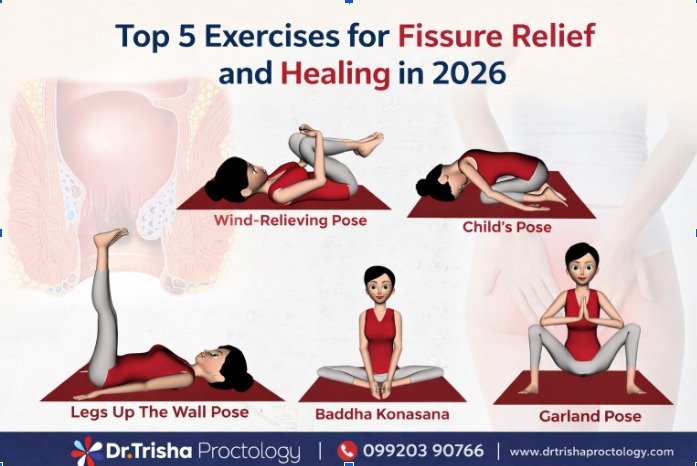
Exercise 3: Child’s Pose (Yoga)
Child’s Pose is a gentle yoga posture that stretches the lower back, hips, and pelvic region, relieves pressure on the anal area, and promotes relaxation of the anal sphincter muscle.
How to perform: Kneel on a yoga mat. Sit back on your heels, then stretch your arms forward and lower your forehead to the mat. Hold the position for 30–60 seconds while breathing deeply. Repeat 3-5 times. The deep breathing during this pose also reduces stress, a key factor in digestive health.
Exercise 4: Legs Up the Wall (Viparita Karani)
This restorative yoga pose improves pelvic circulation, reduces inflammation, and relieves pressure from the anal region by temporarily reversing gravity’s effect on the pelvic area.
How to perform: Lie on your back next to a wall. Gently lift your legs and rest them vertically against the wall. Keep your arms relaxed at your sides. Hold for 5–10 minutes while breathing slowly and deeply. This pose is particularly effective when done before bedtime.
Exercise 5: Deep Breathing and Diaphragmatic Breathing
Chronic stress and anxiety disrupt bowel habits and increase anal sphincter tension, both of which worsen fissures. Deep diaphragmatic breathing activates the parasympathetic nervous system, reducing muscle tension and promoting healthy gut motility.
How to perform: Sit or lie comfortably. Place one hand on your chest and one on your abdomen. Inhale slowly through your nose for 4 counts, allowing your abdomen to rise. Hold for 2 counts. Exhale slowly through your mouth for 6 counts. Repeat 10 times, twice daily.
Exercises to Avoid With Anal Fissure
- Running and jogging creates friction and impact
- Cycling direct pressure on the anal area
- Heavy weightlifting increases intra-abdominal pressure
- Sit-ups and crunches strain the pelvic floor
- High-intensity interval training (HIIT) too intense during recovery
FAQ:
Q: Can exercise make anal fissure worse?
A: The wrong type of exercise can. High-impact activities like running, cycling, or weightlifting can aggravate fissures. The exercises listed above are specifically chosen to be safe and beneficial.
Q: How soon after fissure treatment can I start exercising?
A: Light walking can usually begin within 1–2 days after laser fissure treatment. More structured exercise can resume after your follow-up with Dr. Trisha Rai confirms adequate healing.
Q: Do Kegel exercises help with fissure pain?
A: Yes. Kegel exercises reduce sphincter spasms, which are a primary cause of prolonged pain after bowel movements in fissure patients.
Q: Is yoga safe for anal fissures?
A: Gentle, restorative yoga poses like Child’s Pose and Legs Up the Wall are safe and beneficial. Avoid intense yoga styles like power yoga or hot yoga during recovery.
Q: Can walking cure anal fissure?
A: Walking alone cannot cure a fissure but significantly supports healing by improving bowel regularity and circulation. It works best as part of a comprehensive treatment plan.