
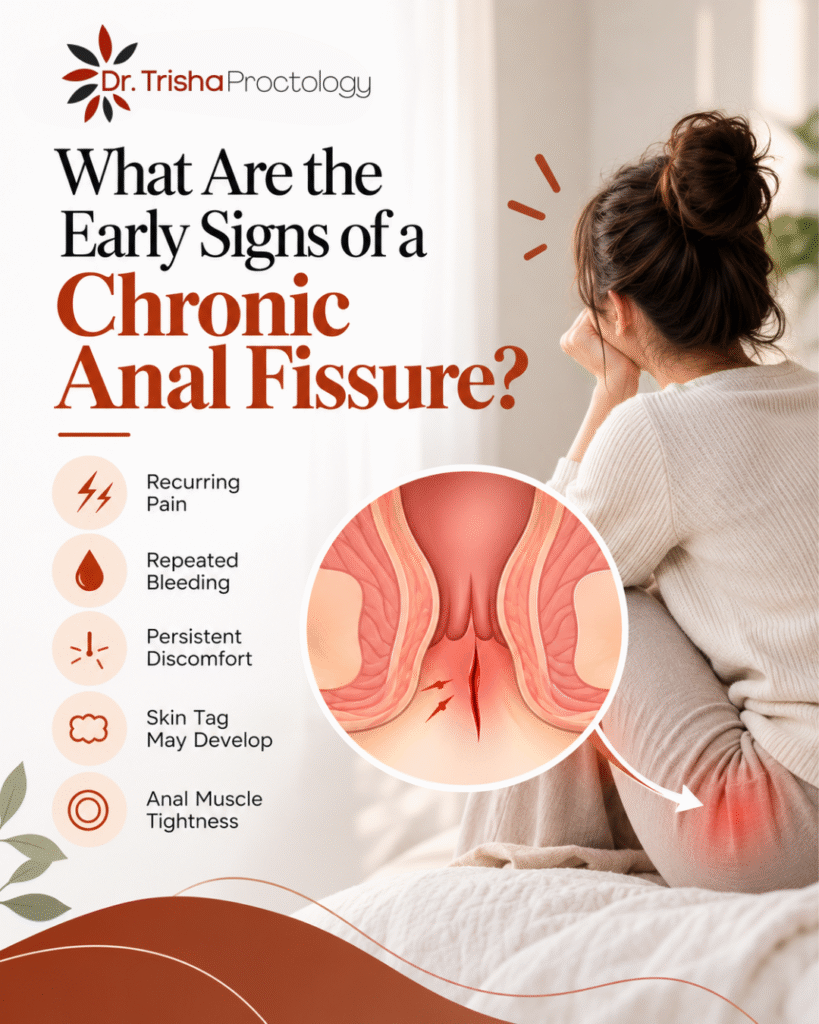
An anal fissure often begins as a small tear that may heal with appropriate care. However, when the tear continues to reopen or does not heal properly, it can become a chronic anal fissure.
Recognising the early signs of a chronic fissure is important because persistent symptoms may indicate that the condition is no longer healing normally. Early medical evaluation can help identify factors that are preventing recovery and determine whether additional treatment is needed.
What Is a Chronic Anal Fissure?
An anal fissure is a small tear in the lining of the anus. It commonly develops after passing a hard or bulky stool, although constipation is not the only possible cause.
An acute fissure may heal within a few weeks. When symptoms persist, the fissure repeatedly returns, or the tear fails to heal properly, it may become chronic.
A chronic fissure can involve ongoing inflammation, anal muscle spasm, and repeated injury during bowel movements.
What Are the Early Signs of a Chronic Anal Fissure?
The symptoms of a chronic fissure can initially look similar to those of an acute fissure. However, certain patterns may suggest that the problem is becoming persistent.
1. Pain Keeps Returning During Bowel Movements
One of the most noticeable signs is recurring pain whenever you pass stool.
The pain may feel:
- Sharp
- Burning
- Cutting
- Throbbing
Instead of gradually disappearing as the fissure heals, the pain continues to return with bowel movements.
2. Pain Continues After Passing Stool
Fissure pain does not always stop when the bowel movement is over.
A person may experience burning, throbbing, or aching discomfort for some time afterward.
Persistent post-bowel-movement pain can occur because the fissure irritates the anal sphincter and triggers muscle spasm.
3. Repeated Bright Red Bleeding
A small amount of bright red blood may occur when an anal fissure is present.
If bleeding repeatedly occurs with bowel movements rather than gradually resolving, it may indicate that the fissure continues to be irritated.
Blood may be noticed on toilet paper, on the surface of the stool, or in the toilet after passing stool.
Any persistent rectal bleeding should be evaluated because there can be causes other than an anal fissure.
4. The Fissure Keeps Reopening
A fissure may start to improve but then become painful again after passing a hard stool.
Repeated reopening can prevent the tissue from completing the healing process.
This can happen particularly when constipation, hard stools, or excessive straining continue.
5. A Skin Tag Develops Near the Fissure
A small lump or skin tag may develop near a chronic fissure.
This is sometimes referred to as a sentinel skin tag and can occur when a fissure has been present for a prolonged period.
However, not every lump around the anus is caused by a fissure, so any new or persistent lump should be properly assessed.
6. Persistent Anal Tightness or Spasm
An anal fissure can cause the internal anal sphincter to tighten involuntarily.
This may result in a sensation of tightness or pressure around the anus.
Persistent muscle spasm can contribute to ongoing pain and may make healing more difficult.
7. Fear of Passing Stool
When bowel movements repeatedly cause pain, some people begin delaying or avoiding them.
This can create a cycle:
Pain → avoiding bowel movements → constipation → hard stool → fissure irritation → more pain
Breaking this cycle is important for preventing continued irritation.
Why Does an Anal Fissure Become Chronic?
Several factors can contribute to a fissure becoming persistent.
Constipation
Hard stools can repeatedly stretch the fissure and prevent it from healing completely.
Straining
Excessive pushing during bowel movements can increase pressure on the affected area.
Anal Sphincter Spasm
Pain can cause the internal anal sphincter to tighten. Persistent spasm may contribute to pain and interfere with the healing process.
Repeated Irritation
Repeated hard bowel movements, frequent loose stools, or other irritation can prevent the tissue from recovering.
Delayed Evaluation
If symptoms continue for an extended period without addressing the underlying cause, the fissure may become more difficult to manage.
Acute vs Chronic Anal Fissure
Understanding the difference between an acute and chronic fissure can help you recognise when symptoms may need further attention.
Acute Anal Fissure
An acute fissure is generally a recent tear.
It may cause pain and bleeding but can often heal with appropriate conservative care when the factors causing repeated injury are addressed.
Chronic Anal Fissure
A chronic fissure persists or repeatedly returns despite attempts to allow it to heal.
It may be associated with:
- Recurrent pain
- Persistent or repeated bleeding
- Anal sphincter spasm
- A skin tag near the fissure
- Repeated reopening of the tear
A chronic fissure may require more structured medical treatment.
Can a Chronic Anal Fissure Heal Without Surgery?
Some chronic fissures may improve with appropriate medical management, depending on the individual condition.
Treatment may focus on:
- Keeping stools soft
- Managing constipation
- Reducing straining
- Relaxing the anal sphincter
- Supporting tissue healing
- Preventing repeated injury
A doctor may prescribe medicines when appropriate.
If conservative treatment does not provide adequate improvement, additional treatment options may be considered.
Surgery is not automatically required for every chronic fissure. The appropriate approach depends on the individual’s symptoms, medical history, and response to treatment.
For personalised guidance on anal fissure treatment, you can consult Dr. Trisha Rai to understand which treatment approach may be appropriate for your condition
When Should You See a Doctor?
You should consider medical evaluation if you notice persistent or recurring symptoms such as:
- Pain during or after bowel movements
- Repeated bright red bleeding
- A recurring fissure
- A lump or skin tag around the anus
- Persistent anal tightness or discomfort
- Constipation that repeatedly triggers symptoms
- Pain that has not improved with conservative care
It is particularly important to seek evaluation when symptoms keep returning instead of gradually improving.
If your fissure symptoms are persistent or recurring, book an appointment for a professional evaluation and appropriate treatment guidance.
Why Early Evaluation Matters
An anal fissure that is identified and managed appropriately may have a better chance of healing before it becomes a persistent problem.
A specialist can assess the symptoms and determine:
- Whether the condition is an anal fissure
- Whether it appears acute or chronic
- Whether constipation is contributing to the problem
- Whether anal muscle spasm is present
- Whether conservative treatment is appropriate
- Whether additional treatment may be required
Persistent rectal bleeding or anal pain should not be self-diagnosed because other anorectal conditions can cause similar symptoms.
Consult Dr. Trisha for Persistent Fissure Symptoms
If your anal fissure keeps coming back, continues to hurt after bowel movements, or is not healing as expected, professional evaluation can help identify what is preventing recovery.
Dr. Trisha provides evaluation and treatment for anorectal conditions, including acute and chronic anal fissures.
If you are experiencing recurring pain, bleeding, constipation, or a persistent lump around the anal area, getting the condition evaluated can help determine the most appropriate treatment approach.
Early attention can help prevent recurring symptoms from continuing to affect your comfort and daily life.
Conclusion
The early signs of a chronic anal fissure can include recurring pain during or after bowel movements, repeated bleeding, reopening of the fissure, persistent anal muscle tightness, and the development of a skin tag near the affected area.
An acute fissure can often heal with appropriate conservative care. However, symptoms that continue or repeatedly return may indicate that the fissure is becoming chronic.
If your symptoms are persistent, do not continue waiting indefinitely for the fissure to heal on its own. A proper evaluation can identify factors such as constipation, straining, or muscle spasm that may be preventing recovery and help determine the right treatment approach.